
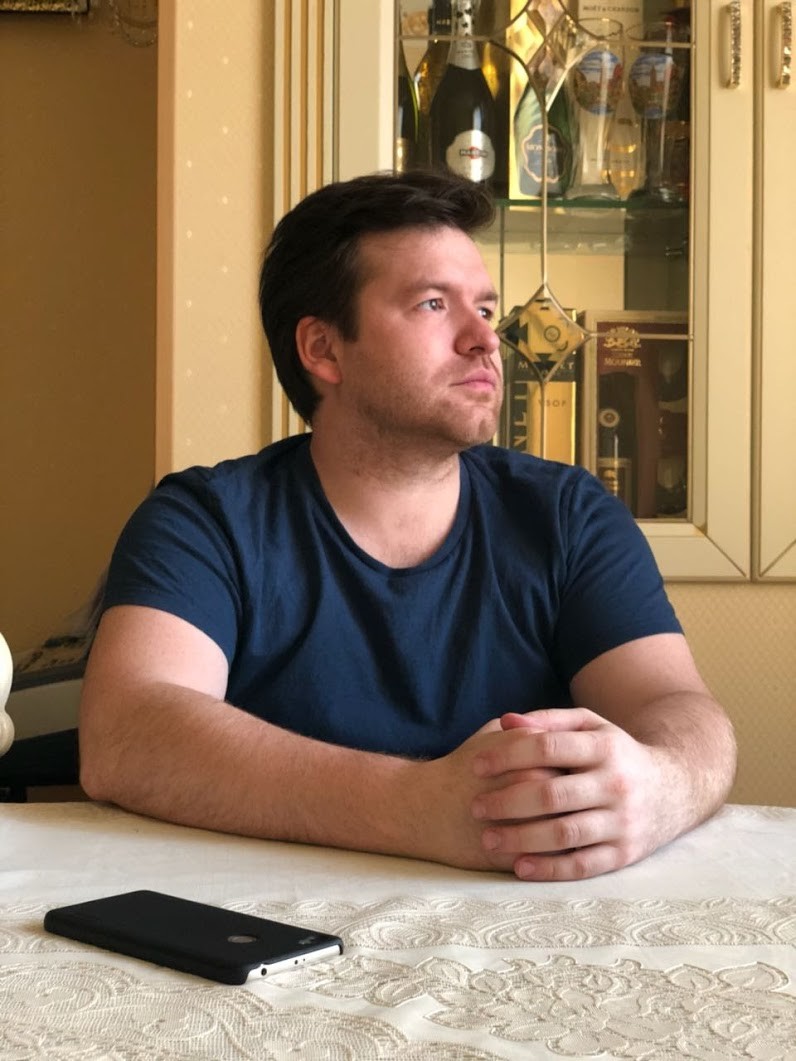
Виталий Лобанов
ОСНОВАТЕЛЬ
“ МЫ УЧИМ ВАС ТАК, КАК ХОТЕЛИ БЫ, ЧТОБЫ УЧИЛИ НАС!”
READING TEXTS 1
1
Recycling is a technology that helps protect the environment and cut down on usage of raw materials. The steel, paper and glass industries recycle a lot. The largest recycler is the steel industry. It recovers more than 70 per cent of its original materials. For example, since 1988 they have produced the majority of new metal cans from old ones. Metal parts for cars and planes are other examples of recycling steel. Fragments of waste glass are widely used in construction. For producing writing paper and pens, used packing boxes are an ideal material. They are cheap and easy to recycle. Nowadays more and more recycling centres are appearing in our towns and cities.
2
Nowadays solar energy is widely used as an alternative form of power. Solar panels transform the energy from the sun into electricity. The first plane that does not need fuel was constructed in France in 2015. It uses only the sun's energy. The panels are placed on the huge wings of the plane. It doesn’t fly very fast. Solar energy can make the plane move at only 140 miles an hour. However, the plane is able to travel around the world. It is safe and can successfully cross areas of bad weather. In the future, engineers hope to construct a model that people can fly in. Our dream of environmentally friendly transport may come true very soon. Would you like to take a flight on the solar plane?
3
We are always told that we should clean our teeth regularly to keep them healthy and to have fresh breath. It is believed that people started using a kind of paste to clean their teeth around 5000 years ago. However, the ingredients of these tooth powders were very different from ours. For example, the people of ancient Egypt used salt, mint, dried flowers and pepper to create tooth powder. Later, in the 18th century, in some countries in Europe, people brushed their teeth with burnt bread. The first toothpaste appeared in 1890, in Great Britain. At first it was sold in jars. Then special tubes were designed to make the toothpaste more comfortable to use.
4
Do you know why it is hot in the summer and cold in the winter? Most people believe that it is because the Earth is closer to the Sun in the summer and farther from it in the winter. But it is not like this at all! In fact, the distance between the Earth and the Sun is largest in July and smallest in January! Scientists suggest that the reason for different summer and winter temperatures is the angle of the Sun’s rays. In the summer, the rays reach the Earth almost at a right angle. Due to this, the rays are not spread out and a smaller area of the planet's surface gets the energy. In the winter, the angle changes and the Sun’s rays are spread out over a larger area. Besides this, the long nights and short days do not give enough time for the land to warm up.
5
A robot is a machine that does work for people. The word ‘robot’ appeared in the 1920s and it was first used in a science fiction story. In real life, the robot was invented later, in 1954. There are different kinds of robots which are used in different industries. Most of them are operated with the help of a computer program. Instead of humans, robots do hard and boring work in unpleasant or dangerous environments. They usually work faster and more accurately than people. They never get tired and do not make mistakes. Nowadays robots are often used for domestic needs – to clean houses or to look after sick and elderly people. Scientists say that soon robots will become a normal part of our life, like mobiles and computers today.
6
Nowadays people can’t imagine their kitchen without a refrigerator. The first refrigerators appeared at the end of the 18th century. They looked different: they were just iceboxes. The refrigerators of the past were just wooden boxes, sometimes lined inside with metal. People put ice into the box and then placed the food inside to keep it cool. The refrigerator, similar to the one that we have now, was produced by General Electric in 1911, in France. It was very expensive. In those days, with the same money you could buy two cars. Today, in developed countries almost every family has enough money to buy a refrigerator for their kitchen. It’s hard to imagine how difficult and uncomfortable our lives would be without a refrigerator.
7
Without the energy from the Sun, the Earth would have no life at all. Nowadays everyone knows that the Sun is a star. Like all stars, the Sun is a great burning ball of gases. To us, it seems large and red. The other stars look white or light blue because they are much farther from us than the Sun. In the past, many people believed that the Earth was the centre of the universe. They thought that the Sun and the stars went round it. Only in 1543, a great Polish scientist published a book in which he tried to prove a different point of view. According to him, the Earth and the other planets moved round the Sun. Those people who supported the scientist were often imprisoned and even killed.
8
The carrot is a root vegetable which consists mostly of water and sugar. The carrots that we eat today originated from the wild ones which grew in Europe and Asia. The vegetable tasted sweet and the people began to use it as food. There are two main types of carrots. There are eastern carrots that have dark purple roots and western carrots with orange roots. In fact, orange carrots first appeared in Europe in 1721. Dutch farmers selected orange carrots because orange is the colour of the Dutch Royal Family. Now orange carrots are widely grown all over the world. In modern households carrots are cooked and eaten in different ways. The vegetable is boiled, fried, baked and eaten raw. People also make juice from it.
9
Since 2007 high-speed trains have become a common type of transport in Europe. They make it possible to cut travel times by hours. The trains travel at 350 kilometres an hour, and this is not the limit! The only problem for the engineers is the loud noise the trains produce. People living in the areas the trains travel through suffer from the noise greatly. For the passengers, the situation is different. For their comfort, all the carriages are made sound-proof from the inside. Travelling on high-speed trains is comfortable and pleasant. In the future, a high-speed railroad network could cover most of Europe. For example, a trip from Paris to Rome could take only 3 hours!
10
Venus is one of the hottest planets in the Solar system. The temperature on its surface is 482 degrees. This unfriendly place looks much the same as the Earth 4 billion years ago. Both planets were formed from the same gas cloud, but Venus lost most of its water and atmosphere. This happened because the planet turns very slowly. As a result, now it has no magnetic field to protect it from the Sun's winds. The planet has turned into a lifeless desert. Most space modules that were sent to Venus could not work on the planet more than two hours. The acidic clouds and high pressure quickly made them absolutely useless.
11
Studies of the atmosphere first received technical support in 1912. Equipment to measure temperature and pressure was invented in Germany. But the question was how to raise it high into the air. In 1921, Russian engineers suggested using planes. The special equipment was put on planes that made regular flights. Thanks to this, scientists got a lot of new information about the structure of the atmosphere. Nowadays scientists use modern flying laboratories to study the structure of clouds at different levels. Unlike the first planes, these laboratories can work in any weather and are able to predict climate changes.
12
Wombats are exotic animals that only live in Australia. They have become an unofficial symbol of the country. In 1974 a wombat appeared on an Australian stamp for the first time. Since then it has been regularly used on different Australian stamps and coins. Wombats look like little bears and prefer grass to meat. They also love eating berries, plant roots and mushrooms. Like camels, wombats drink little water because there is enough water in fresh grass. Wombats spend most of their life in holes under the ground. With their strong arms and long nails they are able to dig very long and complex tunnels. Fortunately, wombats have few enemies in the animal world. Most wombats live around 15 years.
13
The word ‘tsunami’ can be translated from Japanese as ‘big wave’. It describes a natural process that can be dangerous for people and their homes. Most of the huge waves appear after earthquakes. Most waves are born in the Indian and the Pacific Oceans where volcanoes are active. The mass of water rises from the bottom of the ocean and moves to the shore. It moves at a speed of a plane and can be up to 40 meters high. The wave is very powerful and dangerous. In 2004, a tsunami happened in the Indian Ocean. It was one of the most terrible natural disasters in history. It hit 14 countries bordering the Indian Ocean. Thousands of people were killed or went missing.
14
Snowdon is the highest mountain in Wales. It is located in a national park. It stands at 1085 metres above sea level, and it is often described as the busiest mountain in Great Britain. Snowdon is very popular with tourists. If you are strong and brave enough to get to the top, you can enjoy wonderful views from there. On a clear day, you can see as far as Ireland! During the summer months there is a café at the top. There, tourists can get a welcome cup of tea, or soup if the weather is cold. If you feel too tired to walk back, you can always take the train down the mountain. The mountain railway was built in 1896. It is safe, and there have never been any accidents on this route.
15
Most people enjoy watching the night sky. And the brightest object in the sky is the Moon. Every night the Moon rises in the East and sets in the West. It takes about 27 days to go around the Earth, and it’s an interesting fact that we always see the same side of the Moon. The Moon is the closest object to the Earth. It would take us only 13 hours to get to the Moon by rocket. If we were able to travel at the speed of light, it would take a bit less than two seconds. There is a very thin atmosphere on the Moon. Life is not possible there. In spite of this, the Moon can be used as a base for space exploration and even for space tourism. Some space companies say that they will be able to take tourists to the Moon as soon as in 2030.
16
The first vacuum cleaner was designed in 1869. Since then, vacuum cleaners have changed a lot. Nowadays the robot vacuum cleaner is getting more and more popular. This device cleans a house automatically. Following a programme, the robot drives slowly around the house and makes it cleaner. It operates with brushes and a tube. The robot is so flexible that it can get under a table or sofa or reach dust in corners. Some advanced models can also wash floors of all kinds. These functions are provided by a complicated electronic system and sensors inside. The vacuum cleaner looks like a plate and can be kept in the corner. It is friendly to children and animals and works on electricity.
17
It's hard to find a more popular Russian symbol than the traditional Russian doll, or Matryoshka. It is well-known all over the world. The first set of dolls appeared in Moscow in 1890. It consisted of nine dolls. All of them were children: seven girls, one boy, and a baby. In those times, Matryoshkas were not meant as toys for children as their price was very high. Mostly, adults bought them as presents or home decorations. There was a belief that if you put a note with a wish into Matryoshka, it would come true. At the beginning of the 20th century, Russia started to export their national dolls abroad.
18
Global warming is a result of human activity. In 1985 there was a big conference in Austria where 89 climate researchers from different countries took part. After long discussions the scientists declared that the climate of the planet had changed. Indeed, it is warmer now than it was years ago. It can be clearly seen in the north. In the Arctic some places are ice-free now and polar bears have lost the place where they lived. The sea level has risen as well. The situation is getting more and more serious. Global warming is a great problem which needs to be solved in the near future.
19
English is the third most-spoken language in the world after Chinese and Spanish. Over 840 million people speak English as a first or second language. It is an official language of 67 countries. 80 percent of information stored on all computers in the world is in English. The vocabulary of the English language is the biggest in the world. A new word is added into English almost every two hours. The English language is said to be one of the happiest languages in the world. The word happy is used more often than the word sad! That's a good reason to learn this language, isn’t it?
20
The human brain is the most complex and remarkable organ of the body. It controls everything we do – thinking, learning, and even heart rate. Though the brain makes up only 2 percent of the body's weight, it uses around 20 percent of its energy. It works 24 hours a day. Even when a person is sleeping, the brain is working hard to keep other organs functioning. Most people think that our brain is more active during the daytime because it needs to deal with a great amount of information. In fact, that’s not true. The brain is far more active when a person is sleeping! However, scientists don’t yet have any explanation for this fact.
21
We don’t realize how lucky we are to have clean water whenever we want. A lot of people around the world do not have such an opportunity. Did you know that more than 750 million people on the Earth do not have clean water to drink? Meanwhile, a lot of water is wasted and polluted. In 1993 the United Nations decided to celebrate the World Day for Water. Nowadays a lot of special events are organized in different countries. Their aim is to make people understand how important clean water is for their health, environment and agriculture. Water is essential for our life. We should think about saving it, as the fresh water supplies are limited. We need to keep it clean for ourselves and for future generations.
22
The human brain is the most complex and remarkable organ of the body. It controls everything we do – thinking, learning, and even heart rate. Though the brain makes up only 2 percent of the body's weight, it uses around 20 percent of its energy. It works 24 hours a day. Even when a person is sleeping, the brain is working hard to keep other organs functioning. Most people think that our brain is more active during the daytime because it needs to deal with a great amount of information. In fact, that’s not true. The brain is far more active when a person is sleeping! However, scientists don’t yet have any explanation for this fact.
23
People have always wanted to discover new things and new worlds. We have built spaceships to go to other planets and are planning to visit other galaxies one day. Meanwhile, we know very little about our own planet. The oceans, which cover 70 percent of the planet, are an unknown world to us. The Pacific Ocean is the largest one. The lowest point on the Earth is also there. It is called Challenger Deep and it was discovered in 1875. The Pacific Ocean stretches from the Arctic Ocean to the coast of Antarctica, but most of its water is in the warm tropics, which makes it warm. A lot of fish and animals live in the Pacific Ocean. The place is still waiting for researchers to discover its secrets for us.
24
The Arctic Ocean is the smallest ocean of the world. It covers the northern polar region of the Earth. The Arctic region is a very cold place. The lowest recorded temperature there is minus 68 degrees. In spite of the cold, a lot of animals live on the Arctic ice. The polar bear is one of them. Now, due to global warming, the polar bear is in a serious trouble. The thing is that polar bears hunt seals and they need ice to do this. The bears wait for seals on the ice, hunt them in the water and go back to the shore. If the ice is too thin, it breaks under the bears’ heavy bodies and they may drown. The situation is getting worse and some researchers say the ocean may become ice-free as soon as 2050.
25
In 1642 a French student invented the first mechanical calculator. He was only 18 and the counting machine was a present for his father. The father worked as a tax collector and the young man wanted to make his job easier. The talented inventor made several machines, but nobody was interested. The young man was ahead of his time. Many years passed before people realized how useful these machines could be and started mass producing them. Today most mechanical calculators have been replaced with electronic models. These small devices can perform a lot of mathematical operations. You just need to enter the numbers by pressing the keys and you’ll see the final result on the screen in no time.
26
One day a young man who lived near the lake in a small American town asked himself, “Why can’t people ski on water if they can ski on snow?” With his brother’s help he constructed several models of skis to test his ideas. He experimented on the local lake for a few days and created skis suitable for the water. This happened in 1922. The young man, who was only 18 at that time, didn’t patent his invention. However, he performed a lot of shows across the country that made him and the sport of water skiing popular. Later, he was recognized as the creator of a new sport – water skiing. Water skiing equipment has been greatly improved since that time, and the number of people who enjoy this sport is growing in many countries.
27
The ninth planet of the solar system was discovered not long ago. It happened in 1930. Scientists had been hunting for the planet for a long time. They had calculated its probable position, but there was no proof that the planet really existed. It was too far away for the telescopes of that time to find it. It’s worth mentioning that the first photos of the planet were taken by a very young researcher. He was only twenty-four and had no formal education in astronomy. However he was deeply involved in the search for the ninth planet. The planet at the edge of the solar system was called Pluto, after the Roman god. The name for the planet was suggested by an 11-year-old British girl.
28
Though most people believe that the tomato is a vegetable, this plant is actually a fruit. Tomato is a fruit because it has seeds inside like apples, oranges, lemons, and all other types of fruit. The tomato comes from Central and South America. When tomatoes were brought to England in the 17th century, people thought that they were poisonous and refused to eat them. Only in 1820, Robert Johnson proved that tomatoes were absolutely safe and would not affect people’s health. He ate a basket of tomatoes in public. Nowadays, the tomato is widely used in all types of food. There are many different kinds of tomatoes – over 7,500! They differ in size, shape, colour and taste.
29
Earth Hour is an event that encourages people around the world to switch off electricity at the same time for one hour. Of course, switching off the lights for an hour makes a small difference to the amount of energy we use. But the aim of the event is not to save energy but to get people to think about the planet they live on. Earth Hour started in Australia in 2007. More and more countries join the ecological movement every year. Now, millions of people from 178 countries switch off their lights for 60 minutes at the end of March. People in Russia participate in this event too – large office buildings and small private houses go dark for Earth Hour.
30
Our planet is the only planet in the Solar System where rainbows are possible. They are not visible in big cities, due to pollution and smog. But if you are travelling after rain has fallen in the countryside or walking on the beach, you have a good chance to see a rainbow. The rainbow is a multi-coloured arc which appears in the sky. When you see a rainbow, the sun is always behind you and it is raining in front of you. It is impossible to get to the end of the rainbow and to touch it. When you move, the rainbow moves too. We have always learned that rainbows have 7 colours. However, until the 17th century, people used to think there were only 5 colours in the rainbow.
31
The Channel Tunnel is a rail tunnel beneath the English Channel which links Great Britain and France. It is considered to be one of the most amazing engineering constructions in Europe. The second longest undersea tunnel in the world was opened in 1994. It is said that 13,000 workers and engineers participated in the construction project. The Channel Tunnel contains three tunnels. The south tunnel is for people who are travelling from France to the UK, the north tunnel takes passengers from the UK to France. Nowadays it takes 35 minutes to go from Paris to London in the Channel Tunnel. The third tunnel is a service tunnel. It is not used by passengers.
32
The construction of the longest and the deepest railroad tunnel was finished in Europe. The tunnel runs through the Alps and links the north and south of Europe. The length of the tunnel is 57 kilometres. It runs straight from beginning to end. It will allow passenger trains to travel more quickly through the mountains. Modern technologies ensure safety and security when the trains go through the tunnel. The great project started in 2009 and it took 17 years to complete. It is considered to be one of the most amazing engineering constructions in Europe.
33
Bicycles or bikes are an important means of transportation in many parts of the world. The first bicycles turned up in Europe in the first half of the19th century but the word ‘bicycle’ only appeared later, in 1868. There are more bicycles in the world than cars. About 100 million bicycles are produced worldwide each year. A lot of people have realized that cycling is an easy way to get around and a great way to cut down on pollution. More and more cities have special places where people can borrow a bike and ride around the city. Over the past few years, a bicycle infrastructure has been created in Moscow. Cycling in the centre of Moscow in summer is one of the most pleasant and quickest ways of seeing the city.
34
Great Britain is home to the world’s oldest school. The King’s School was established in 1567 and it is still open. It has a long history. Many famous people have been educated at this old school. Nowadays The King’s School is an independent secondary school for boys and girls from 13 to 18. More than 800 pupils study at the school. Though The King’s School is located in old buildings, it has up-to-date technical equipment and provides a full modern education. The King’s School is also famous for its festival of music, drama and arts. It is held during the last week of the summer term and attracts a lot of people from different parts of the country.
35
Human activity creates waste. The problem isn’t new and space is no exception to the rule. Dead satellites, rocket stages and other things are littering our planet’s orbit. They are getting dangerously close to space stations and there is a great possibility of an accident. Space stations could be completely destroyed by the rubbish. In 1983, a tiny piece of paint from a satellite made a big hole in the side window of a spaceship. There is a great need to “clean up” space and to take away 3,000 tons of space rubbish. To solve the problem, scientists and engineers are designing special spaceships that will collect and recycle space rubbish.
36
The mobile phone has become an important part of our everyday life. We can’t imagine our lives without it now. Thanks to the mobile phone we can keep in contact with our relatives and friends at any time. We use them to text and to send emails, to share photos and videos. We can use the Internet and listen to music and do lots of other things. However, according to surveys, mobile phone users mostly spend their time on games and social networking. Around 80 percent of the world’s population has a mobile phone. The mobile phone industry is the fastest growing industry in the world. From 1983 to 2016, worldwide mobile phone subscriptions grew to over 7 billion.
37
Netball is played by over 20 million people in more than 70 countries of the world. It was invented in 1892 as women’s basketball. However, netball is different from basketball in many ways. For example, the ball and the basket are smaller and the court is bigger. The players cannot run with the ball. They are not allowed to touch the players who they are playing with. Netball has seven players in each team (not five as in basketball). During the 20th century, the game became very popular in English-speaking countries. Traditionally, only girls and women have played netball. Nowadays, netball is the number one women’s sport in the world but boys and men are starting to play it too.
40
Oxford University is the oldest university in the English-speaking world. It is also the second oldest university in the world. The University of Oxford is believed to have started in 1133. It is located in Oxford City on the Thames River, not far from London. Oxford University is one of the world’s most impressive centres of education. There are students from different countries there. In fact, there is no building in Oxford called Oxford University. The University includes 38 colleges and related buildings. Over 22,000 students study English language and literature, geography, history, law, modern languages and other subjects there.
41
The rainforest can be described as a thick and very tall jungle. The term rain comes from the great quantity of water that these forests get throughout the year. The rainforests are the world's greatest natural resources. They are called the lungs of our planet. Half of all the kinds of plants and animals that exist on the planet live in the rainforests. Unfortunately, the area with rainforests is being reduced due to global warming. 100 years ago, the rainforests covered 14 percent of the earth’s surface. Now, it is only 6 per cent. Scientists say that if the process continues at this rate, the rainforests will have disappeared in 40 years.
42
The Caspian Sea is one of the world’s natural wonders. It shares the characteristics of both a sea and a lake. In the past it was called a sea because of its great size and salty water. However, the Caspian Sea is listed as the largest lake in the world. There are about 130 rivers which bring their water to the Caspian Sea. But it is not a freshwater lake – its water is very salty. The Caspian Sea is famous for its wildlife. More than 850 kinds of animals and 500 different plants can be found in this unique sea. The Caspian Sea region is also one of the oldest oil-producing areas in the world. It is also rich in other natural resources.
43
As soon as spring brings a new growth of bushes and berries, bears start feeding. They eat and eat. All through the spring and summer their feeding goes on. The bears build themselves up. They store food and fats that they will need in the fall when they start their long sleep.
As days grow shorter, and the temperature begins to fall, bears hunt for a sleeping place. It may be a shallow cave, or a deep crack between rocks. Some bears end up sleeping in hollow logs. Logs seem to be bears’ favourite places. Bears seem to choose small spaces. They can keep warmer in a cave that’s just large enough to hold them than in a larger cave. They often line their sleeping place with leaves and dried grass. All through their winter naps, bears will not eat. Often they will sleep for 7 months, moving only now and then.
44
Many lands that had once been swamps were drained or filled in. There are different reasons why people drained swamplands. Some were drained to fight diseases caused by insects that lived in them. Because swamps were considered unpleasant places in which to live and harmful to health, many people thought that unless they were drained the land was worthless. Other swamps were drained to make new land. As the population grew and more land was needed, people drained swamps or filled them to make room for more farms and factories, more roads and airports.Few people thought that it might be harmful to get rid of swamps. As swamps disappeared, other things happened. There were both more floods and more droughts than before. There were also more fires, for swamps had acted as firebreaks.
Hunters noticed that there was less wild game. Wild life that once lived in the swamps was dying out, because it had no place to live.
45
A hobby is an activity you enjoy doing, it is something of your choice, something unique to your taste and talent. A hobby can improve our well-being; it can give more meaning to our life. Just as physical exercise is important for the body, relaxation of the mind is also essential. In fact, studies reveal that people who cultivate themselves through such activities are less likely to suffer from anxieties, depression and other negative feelings. A hobby is the easiest way to restore your balance whenever you are overworked or stressed. Since it is an activity of your choosing, it will always give you pleasure and help you to relax. Even if you indulge in your hobby for a short period of time, you still can feel the difference in your energy level and spirit. When you have a hobby, you will always find time for it.
46
The first maps were drawn by explorers to help them find their way home and show people where they had been. The maps showed the shape of the land, distances between places and special features such as caves and old trees. Nowadays, maps show the towns and villages, and the roads, railways, rivers and mountains. Symbols are used to show all the different things on a map and there is a key to explain what the symbols stand for. Over the centuries, people explored most of the Earth and put together the map of the world we use today. Maps of the world or large areas are often either “political” or “physical”. The political map shows territorial borders. The purpose of the physical map is to show features of geography such as mountains, soil type or land use including roads, railroads and buildings.
47
People have enjoyed sports for thousands of years. Children, men and women play sports both for pleasure and for challenge. Every sport involves physical skill. Every sport has a set of rules that the players of the sport follow. In some sports one person competes against other individuals. Examples of these sports include boxing, tennis and so on. In many games one team competes against the other team. People can go in for winter and summer sports. Summer sports are typical for warmer countries. Those who live in regions that experience cold winters have long enjoyed ice skating, skiing, and sledding. These activities have grown immensely in popularity over the years. Today thousands of resorts cater to the winter tourist trade, and millions of people each year take winter sports vacations.
48
Most tourists who come to London want to see the Globe Theatre. It is one of the main landmarks in the British capital. The theatre has always been linked with William Shakespeare. His plays have been staged there for several centuries. Historians say that the theatre was built in 1599. It was a large, round, open air theatre. In those days special coloured flags were used to advertise the type of play to be performed. A red flag was put up for a history play, a white flag for a comedy, and a black flag for a tragedy.The theatre worked for 14 years before it was destroyed by fire. Then it was rebuilt, destroyed, and reconstructed again. The theatre has changed several names and now it is called Shakespeare’s Globe.
49
The telescope is the oldest and probably the most effective tool to explore space. It has been used by astronomers since the 16th century and it has tremendously changed our knowledge of the universe. Certainly, the telescope itself has changed a lot since that time too. The most famous telescope nowadays, the Hubble Telescope, works in space, in low Earth orbit. It works from above the atmosphere of the Earth and that is why it produces fantastically clear photos. The Hubble was launched into space on 24th April, 1990 from the Space Shuttle Discovery and is still in operation. Scientists say its information could help them to solve the mystery of the black holes and to understand how they form.
50
It is believed that the idea of supermarkets first belonged to an American businessman who opened a self-service grocery store in 1916. The main advantage of the new American store was that the goods were stocked on the shelves, so the customers could take their own goods and bring them to the front of the store to pay for them. Although there was a high risk of stealing, the owner found the new shop's organisation more effective because it allowed him to reduce the number of shop assistants. Later the new shop organisation spread widely throughout European countries.
51
Nowadays supermarkets are as British as football and cricket. In the UK 90% of all food is bought at five different supermarket chains. That makes these companies extremely powerful, especially when they deal with small businesses, for example farmers. Milk is a good example. Supermarkets like to use things such as milk and bread, which are at the top of almost everyone's shopping list, to attract customers. To offer the lowest price the supermarkets need to buy milk from dairy farmers very cheaply, so big supermarket chains agree on a very low price and dictate it to farmers. If the farmers don't agree to that price, supermarkets start to look for the cheapest possible products abroad instead.
The consumers are of course happy to get cheaper products, but they should also keep in mind the influence supermarkets have on the environment. First of all there's packaging. Supermarkets like all the products to be packed because it makes it easier to put them neatly on the shelves.
52
Consequently, supermarkets produce nearly 10 million tons of waste packaging in the UK every year, less than 5% of which is recycled. Some supermarkets put large recycling bins in their car parks, trying to create the image that they are environmentally friendly. However, that is just an image. To reach the supermarket shelves the products often have to travel half the globe. Due to preservatives even milk products can stay unspoiled for months. It's a great advantage for the supermarket as yoghurt bought from a farmer can't be kept for longer than 2 days. That is why many small farmers do not even get a chance to compete with long-lasting imported goods. When a new supermarket is planned, everyone says that a lot of new jobs will be created. In reality the number of jobs lost in the area is greater than the number of new positions in the supermarket. Within a 15km radius of every new supermarket that opens the number of people working in the food business goes down. It happens because all the small shops nearby are forced to close.
53
Many Americans enjoy running marathons – a forty-two kilometer race. More than three hundred marathons were held in the United States last year and that number is expected to grow.
The New York City marathon is held every year on the first Sunday of November. It is a big sporting event with thousands of participants. One can see celebrities and famous sportsmen among the marathon runners. A famous cyclist, whose excellent physical condition helped him complete the marathon in less than three hours, admitted that the race was ‘the hardest physical thing he had ever done’.
While the New York City marathon is the biggest, the Boston Marathon is the oldest one. Boston’s is held in April. Boston is famous for the fact that Roberta Gibb became the first woman to unofficially run that marathon in 1966. At that time, people did not believe women could run marathons.ж The Olympics did not hold a women’s marathon event until 1984 in Los Angeles, California. Today’s marathons welcome everyone.
The popularity of the sport has spread among people who are interested in health and fitness. Many middle-aged people like to spend a weekend visiting a new city and running a marathon there. Some magazines call the middle-aged people of today the ‘marathon generation’.
54
For most of us it seems that money makes the world go round. However, not for Mark Boyle who has turned his life into a radical experiment. Mark Boyle was born in 1979 in Ireland and moved to Great Britain after getting a degree in Business. He set up his own business in Bristol. For six years Mark Boyle managed two organic food companies which made him a good profit. However, in 2008, he decided to give up earning money. He vowed to live without cash, credit cards, or any other form of finance. Mark Boyle began to realise that many of the world’s problems are just symptoms of a deeper problem. He thought that money gave people the illusion of independence. Mark sold his house and started preparing himself for his new life. He posted an advert on a website asking for a tent, a caravan (a vehicle for living or travelling) or any other type of a house.
Soon an old lady gave him a caravan for free. At least he then had a roof over his head! After that, with his pockets empty, Mark was ready to go. He didn't even carry keys as he decided to trust the world a bit more and not lock his caravan. On November 28th (International Buy Nothing Day 2008), he became the Moneyless Man for one whole year. Everything was different from then on. Mark lived in his caravan on an organic farm where he worked as a volunteer three days a week. In return he got a piece of land to live on and grow his own vegetables. His food was cooked on a stove, and he washed in a shower made from a plastic bag hanging from a tree, and warmed by the sun.
55
Even breakfast was different. With no morning coffee to brew, Mark had to find an alternative drink to start the day with. So he drank herbal teas, sometimes with some fresh lemon verbena that he could find near the caravan. «It's all very good for you: iron, calcium, anti-oxidants,» Mark said. Food was the first thing to consider. Mark discovered that there were four ways to find it: looking for wild food, growing his own food, bartering (exchanging his grown food for something else), and using loads of waste food from shops. Public interest in his project was divided. While a huge number of people supported him, there was criticism of him, particularly on Internet forums. “People are either very positive about what I'm doing or very negative; I think it's about 70 percent/30 percent. It's funny, if you don't have a massive plasma TV these days, people think you are an extremist,” Mark said. People tend to ask Mark what he learnt from a year of a moneyless life. “What have I learned? That friendship, not money, is real security,” he answers. Mark's remarkable journey is described in his new book “The Moneyless Man”, which shows in a detailed way the challenges he faced on the road to his new world.
56
Have you ever heard of the Great Barrier Reef? It is the world's largest coral reef system along the eastern coast of Australia. In February 2009 an extraordinary position was advertised by the Australian Tourism Office. The advertisement ran that the Great Barrier Reef needed a caretaker for half a year. It was for a special person who would look after the Reef. The job offered a large salary, free accommodation in a luxury villa, and transportation there and around the islands. All expenses would be paid: the winner wouldn't need to spend any extra money on anything. The job's duties were pretty simple. You could only dream of such requirements. First, the person had to speak English and swim well. Second, on the island his responsibility included writing a weekly Internet blog. That's right, weekly, not even daily! The job description also required the successful applicant to explore the islands of the Great Barrier Reef, swim, make friends with the locals and generally enjoy the tropical climate and lifestyle. A real dream! Within the first 2 days of the contest, the tourism office received more than seven thousand online applications. All told, 34,000 people of all different nationalities applied. Each made and presented a 60-second video resume. They had to be creative and they were. In the end 16 people were chosen, who flew to Australia for the final selection. The candidates were interviewed and the winner was Ben Southall from the UK.
57
Ben greatly enjoyed the dream job he had got. He realised that people knew very little about planet earth and its treasures. Living in big cities, they forgot how important the flora and fauna of this world were. Every time Ben went outdoors, he could discover something new. “Every time I dived or went underwater, I forgot about all the troubles above water and concentrated on living in the moment. It was a good way to clean the mind and build respect for the natural world,” Ben said. Ben's life on the island was not just fun. It was very busy, busier than most people imagined, and certainly busier than Ben himself had imagined. He worked seven days a week and up to 19 hours a day. The Best Job included travelling to over 60 islands of the Reef almost every day. It was not just looking after the Reef, Ben had a lot of meetings, press conferences and interviews.
He was getting a lot of attention all the time and he couldn't get away from it. That was probably the hardest part of the job. Moreover, any adventure has a certain degree of risk. Swimming and diving on the Great Barrier Reef was not different. Ben had to deal with whales, sharksand other huge sea creatures. Surprisingly, the most dangerous thing was a small jellyfish about the size of a little finger. It's considered to be extremely poisonous and Ben was stung by it. He had to spend a couple of days in hospital but luckily recovered after a course of antibiotics. Ben often says that the project has taught him a few valuable lessons. Working with the Internet is one of those jobs you can do 24 hours a day. Ben realised it was hard to separate life and work, but this he had to do. He also said: “I've learned that we get one life on earth so we have to use it. There'll always be other countries to visit, other people to meet and other adventures to meet. This is what I wish to do. I'm planning to go to Asia in a few years time”.
58
Where do you expect to see graffiti? Probably not in a museum. Bristol Museum and Art Gallery, in the south-west of England, was the kind of place where you could see classical pictures and statues. However, in the summer of 2009 the exhibition ‘Banksy versus the Bristol Museum’ opened. The exhibition presented more than a hundred works by Banksy, one of the world’s most famous graffiti artists. Banksy is a puzzle to all. He keeps his identity secret. He hardly ever gives interviews and likes to remain anonymous. Nobody knows much about his life or his background but many people believe that his real name is either Robert Banks or Robin Banks and that he was born in England, somewhere near Bristol. Banksy’s street art is always provocative. It's his way of communicating with society. His graffiti is characterised by bright and frequently shocking images, often combined with slogans. His work is often a personal protest against wars, social policy or people's behaviour. Although graffiti is not allowed in cities, Banksy's works have become immensely popular. Banksy believes that art should not be used for advertising. He has refused four times to do adverts for Nike, a famous sportswear company. A year after the Bristol exhibition, Banksy made a film called “Exit Through the Gift Shop”. The film tells the story of a street artist. It got many positive reviews from the critics and from the general audience.
59
Another curious fact from Banksy's biography is that once he was named among the 100 most influential people in the world. He actually found himself in the company of Barack Obama, Steve Jobs and Lady Gaga. When he was asked to send a photo, Banksy sent a picture of himself with a paper bag (recyclable, naturally) over his head. His fans still don’t really know who he is. Bristol isn’t the only place in Britain to welcome and accept graffiti. A park in Dundee, Scotland, has the longest legal graffiti wall (almost 110 metres long) in the UK. Anyone can paint on the wall any time they like. The idea of this graffiti wall project is to demonstrate the positive side of graffiti and to organise workshops and graffiti classes for local children. Even the capital of the country could not stay free of street art. There's a special website dedicated to London's street art and artists. The site's team is a group of enthusiastic young people who are closely connected with the street art world. They try to record and register all the works and display them on their “Street Art London” site. That is quite a job to do! The reason is that street art is very temporal and short-lived: graffiti is soon covered by another wall painting so they have to be quick to take a picture and post it on the website.
60
There's one special day in Britain when you can see lots of people all over the country wearing clown red noses. This is known as Red Nose Day. It's arranged by a charity organisation “Comic Relief” whose aim is to collect money for people who are in need. “Comic Relief” was started in 1985 by the writer Richard Curtis and the comedian Lenny Henry. At that time, people in Ethiopia were suffering from an awful hunger and something had to be done. The idea was simple. Richard and Lenny decided to gather a group of much-loved British comedians to give public performances. And in this way they would collect money to help people in desperate need. They also hoped to let people know about poverty in Africa. Richard and Lenny strongly believe that laughter is the best weapon to fight tragedy, poverty and injustice. That was how “Comic Relief” was born. One of the main events organised by “Comic Relief” is Red Nose Day. It takes place every two years in the spring, though many people think that this day should be held annually. The first Red Nose Day was held on 5 February 1988 and since then they have been held on the second or third Friday in March. The event is widely celebrated in the UK and many people consider it to be a type of unofficial national holiday. The symbol of the day is the red nose which you can find in various supermarkets and charity shops. The thing is that red noses are not sold and you cannot buy them, but you can leave a small sum of money (a donation) and just take one. The exact sum of the donation is not fixed. You can leave as much as you want — it's an act of charity.
61
Since 1985 there have been all kinds of noses: plastic, soft, boring common ones, there were noses that looked like faces, noses that made noises, noses that changed colour when they got hot… This year it's a dinosaur theme, which means noses are shaped like small creatures from pre-history. On Red Nose Day money-raising events take place all over the country and many schools participate. In the evening of Red Nose Day a ‘telethon' takes place on the BBC channels. This is like a televised marathon that shows a selection of the events of the day, and lots of short comic performances and reports of how the money will be spent. It starts in the evening and goes through into the early hours of the morning. There’s a Red Nose Day page on Facebook and you can follow it on Twitter. People also upload videos of local charity events on YouTube and Facebook. So, if you are ever in the UK on Red Nose Day, now you know why you will find normal people wearing red noses and doing silly things! It's all for a good reason!
62
The Internet is just a computer network. It connects millions of computers and millions of people. Within a few short years, the Internet has changed our civilizations permanently and has introduced us to two completely unexpected ideas: first, tens of thousands of people have been laboring to build the Internet; the second idea is that we invariably create something that is much more than the sum of its parts. So, the Internet is the name for worldwide information resources. These resources are so vast as to be well beyond the comprehension of a single human being. Using the Internet means sitting at your computer screen and accessing information. You might be at work, at school, or at home, using virtually any type of a computer. For working with Internet, you need to know Unix. Unix is a family of operating systems (master control programs) that are used to control computers. Virtually all types of computers can run Unix. The term network refers to two or more computers connected together. There are a number of reasons to connect computers into network but the two most important are:
– To allow human beings to communicate;
– To share resources.
The Internet is easy to use, but is difficult to learn. It is not obligatory to be a computer expert: it is for those people who are willing to think and to learn. But by your very nature, you cannot only learn, you are compelled to learn, if you are to remain happy and fulfilled. As the saying goes, there is no royal road to knowledge. For the first time in history, unlimited numbers of people are able to communicate with ease, and we are finding it is in our nature to be communicative, helpful, curious, and considerate.


➡️




LEWIS FOREMAN SCHOOL, 2018-2026. Большая сеть мини школ английского языка в Москве для взрослых и детей. Обучение в группах и индивидуально. 3000+ активных учащихся прямо сейчас.
ФИЛИАЛЫ:
Товарный знак LEWISFOREMANSCHOOL зарегистрирован №880545 в Государственном реестре товарных знаков и знаков обслуживания Российской Федерации
Лицензия на осуществление образовательной деятельности от 14.05.2026 № Л035-01255-50/05051637
Индивидуальный предприниматель Лобанов Виталий Викторович ИНН 071513616507 ОГРН 318505300117561