
Виталий Лобанов
ОСНОВАТЕЛЬ
“ МЫ УЧИМ ВАС ТАК, КАК ХОТЕЛИ БЫ, ЧТОБЫ УЧИЛИ НАС!”
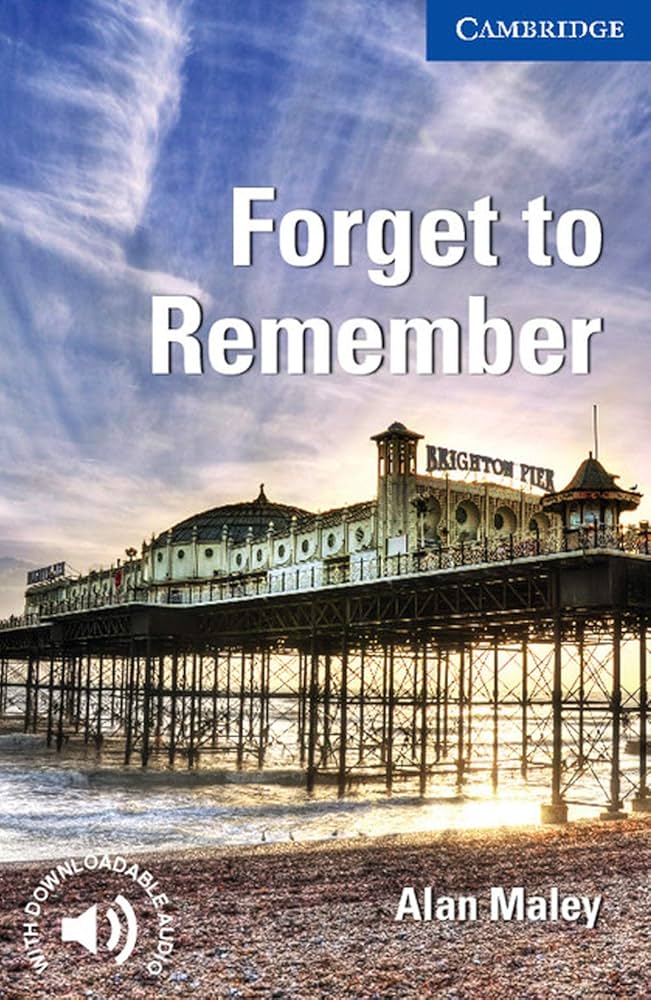
FORGET TO REMEMBER
Адаптированная версия оригинального рассказа
Chapter 1: Remembering and forgetting
Jan picked up the telephone and called her sisters number, but there was only an answerphone message: 'I'm sorry. There's no-one available to take your call. Please leave a message after the beep.'
Jan tried to make her message as calm as possible.
'Hello, Kate. This is Jan. I'm sorry, but you'll have to come down to Mother's. We've got to talk. I can't go on like this. It's becoming impossible. I know you're always busy, but you'll have to come. I can't manage with Mother any more. Please call me back at Mother's house as soon as you can.'
Her mother's voice called weakly from the next room.
'Who was that, dear?'
'No-one important. Don't worry, Mum.'
'Well, if I don't worry, who's going to worry? Someone has to do the worrying'
'It's OK, Mum. Really.'
'Oh good. Did you have a nice time then?'
'Sorry?'
'Didn't you go on holiday somewhere?'
'Not me, Mum. That was Mrs Jenkins from next door.'
'Oh. Who are you then?'
'Mum. I'm Jan. I'm your daughter. Surely you can recognise me.'
'Oh yes. That's right. The trouble is, there's too much to remember. I can't remember everything, you know.'
'I know that, Mum. I know.'
Jan sighed. It was late on Sunday afternoon. The room was already getting dark. On the table there was a bowl of rotting fruit - the bananas were black, the oranges brown. On the shelf above stood her parents' wedding photograph in a silver frame. It was yellow with age. Next to it stood a framed photo of her sister Kate getting her degree from Oxford University. Then there were pictures of Jan's daughter, Cindy, and Kate's children, Jeremy and Caroline, when they were all on holiday together in Spain in happier times. There was a picture of Kate and her husband and children by the river, in the garden of their beautiful house in Marlow. There were pictures of herself and Kate as children. She picked up a picture of her father. He was carrying Kate on his shoulders. He looked so strong, so confident, so full of life.
There were no photos of Jan with her father. That was typical. He had always loved Kate more. She had been his favourite in everything. Jan remembered how he'd always treated her so badly and Kate so well. When Jan left school she'd had to go out to work, not go to university like Kate. But Kate had had the best of everything. Jan had always felt hurt by it. 'Why were families like this?' she wondered. Anyway, now her father had been dead for nearly four years.
As she put the photograph back, Jan noticed the thick dust on the shelf. She sighed again.
Outside the window a cold wind was blowing the petals off the spring flowers. It began to rain.
'Is my father still alive?' came the tired voice from the armchair.
'No, Mum. He died twenty years ago.'
'Oh, did he? What about my mum? Did she die too?'
'Yes, Mum. She died ten years ago. Don't you remember?'
'Are you sure? I thought she came round for a cup of tea last week.'
'No, Mum. That was old Mrs Jenkins who lives next door.'
'Oh, was it...?' Her voice died away as she slowly thought about this piece of confusing information.
She was silent for a while. Her hands lay still in her lap, except when she occasionally moved the newspaper she was holding. Her eyelids were heavy, her eyes almost closed. She began to breathe more loudly, a low bubbling sound coming from her throat. She was dribbling from the corner of her mouth and down her chin, like a baby. Jan tiptoed to the kitchen and put the kettle on for a cup of tea. When she returned, her mother was still fast asleep, her mouth loosely open. Her head had fallen to one side.
Suddenly, she woke up. Her eyes were wide open, but they were empty. They seemed to see nothing. Then they slowly focused again.
'Oh hello,' she said brightly. 'Nice of you to visit me. Have you been here long?'
'I've been here since yesterday, Mum. Don't you remember?'
'Oh, have you? Yes, perhaps you have. But you can't expect me to remember every little thing, you know.'
She picked up the newspaper from her lap and looked at it, but without reading it.
'Anyway, where's my tea? I can't do without my tea.'
'I've already put the kettle on, Mum. It won't be long.'
'I should hope not. I can't wait around forever, can I? I've got work to do.'
'I know, Mum. I know.'
Jan went to the kitchen and prepared a tray with cups, milk and sugar. Then she made the tea, strong and dark the way her mother liked it. Suddenly her eyes filled with tears.
She swore softly under her breath. 'Why do you have to hang on to life like this? It's over for you. Why can't you just die like other people? God forgive me, but why don't you just let go, and die? I can't bear to see you suffering like this anymore.'
She dried her eyes, took a deep breath and carried the tray in to her mother.
It was past eleven o'clock that night when the phone rang. Jan had already fed and bathed her mother and put her to bed. She felt tired, so tired. She picked up the phone.
'Hello?'
'Hello, Jan. It's Kate. I got your message. What's the problem?'
Jan took the phone into the kitchen and closed the door.
'The problem? What do you think the problem is? It's our mother, of course.'
'Why? Has something happened?'
'Something is happening all the time. Her mind is falling to pieces. Bits of her memory are falling into a big black hole.'
'But surely it's not that bad, is it? I mean, she seemed pretty lively to me when I came down to see her last month.'
'Yes, it is that bad. In fact, it gets worse every week, every day even... I've had to see the doctor about her again, and he says she shouldn't be on her own. She can't look after herself. He says she needs twenty-four-hour care. It's all happening so fast. Ah, it's all very well for you. You come down here once a month, if that, spend a few hours with her and then rush off home again. You should try living round the corner from her like me.'
'Surely you're not suggesting that I should drop everything in Marlow and move down to Lewisham, are you?'
'Oh no! I wouldn't dream of it. Your life has to run like clockwork, doesn't it? Nothing must upset your routines - your law cases, and your children, and your holidays, and your husband, and your maid - it all has to be organised, doesn't it? You have so much to do...'
'Don't be so unfair, Jan. I made my choices and you made yours. It's not my fault that you're stuck in Lewisham. You should have moved away when you had the chance, when Dad died. Maybe it would have saved your marriage too.'
'Leave my marriage out of this. Mind your own business. My husband was a stupid idiot and he would have been a stupid idiot wherever we were.'
'OK, OK. Calm down. I didn't mean to hurt you.'
'All right. Sorry. I'm tired. I've been staying here with Mother all weekend. And I'm going to stay tonight as well.'
'Well, I'm tired too. We went mountain climbing in Wales over the weekend, and the drive back here was terrible. You know what the motorway traffic is like on a Sunday. It took us absolutely hours to get back home.'
'Look, Kate, we've got to meet. I can't talk to you properly over the phone. Can you get down here any day this week?'
'Not during the week, Jan. You know that. I have this big case coming up, and I may have to fly over to Paris to see some clients.'
'What about next weekend?'
'Well, I was planning to go up to Cambridge to see Jeremy for the weekend, but I suppose I could just go for the day on Saturday.'
'Good. Can you come straight here from Cambridge on Saturday evening and stay the night?'
'Sorry, Jan. I don't think so. It would be too much of a rush. And we've got a dinner party with some of Hugh's business partners on Sunday evening. It's important. I have to be there. So I'll come down in time for lunch at your place on Sunday, and drive back here in the evening.'
'What about Hugh? Will he come with you?'
'Erm...' There was a long pause. 'I... doubt it. You know how he loves his golf.'
'All right then. Let's leave it like that - you'll come down next Sunday. But please come prepared to listen to me. We can't just go on arguing all the time.'
'Quite. All right, big sister. Sleep well.'
'You too. Goodnight.'
Jan went back into the lounge. She needed a drink. She searched through her mother's drinks cupboard and found a half-empty bottle of Napoleon brandy. In fact, it looked as if it had been there since the time of Napoleon! She poured herself a glass, drank it down and went up to bed.
Chapter 2: A perfect couple
Kate put down the telephone in her study and went back to join her husband Hugh in the lounge. Like the rest of their house, it had expensive modern furniture, with glass and shiny metal tables, leather sofas and armchairs, and a thick cream-coloured carpet.
Hugh was sitting in one of the armchairs, his feet up on a low table, reading the business and finance pages of the Sunday newspaper, and sipping a large glass of whisky. As she looked down at him, Kate noticed, not for the first time, that he was losing his hair and getting rather too fat around the middle. Sometimes she wondered why she had married him. He put the newspaper down.
'So what was that all about?' he asked.
'It was Jan.'
'I know it was Jan. You told me she'd left a message. What did she want this time?'
'It's about Mother.'
'Oh, no. Not again surely! Does she really expect you to call on a Sunday evening just to talk about your mother?' His voice sounded unpleasant, impatient.
'She says Mother is getting worse. She says that she forgets things and can't look after herself anymore.'
'Well, she's old, isn't she? That's the way old people are. They do forget things and get mixed up. What does she expect? What's it got to do with us anyway?'
'Well, she is my mother, you know. And Jan says that she can't manage any longer. She wants me to go down there and discuss it.'
'I don't see what there is to discuss,' said Hugh unhelpfully 'Thank goodness my parents are both dead. At least they can't cause any trouble like that.'
'Anyway, I told her I'd go down to Lewisham next Sunday.'
'You told her what? Have you forgotten we have a dinner on Sunday evening? I told you it was important. I'm trying to get Clerides and Mazumdar to sign up to my new investment fund. God, can't you remember anything!'
'I didn't forget. I'm not like my mother, not yet anyway. I'll go down there for lunch and I'll be back late afternoon, in plenty of time for your dinner. Don't be so bad-tempered. It's not easy for me, you know.'
'It's not easy for any of us,' said Hugh, and picked up his newspaper again.
Kate went back to her study, switched on the desk light and began to read the papers for her court case the next morning. It was a complicated case, involving a disagreement between members of a family about who should own the parents' house and business property. She sighed. She felt tired - exhausted by the mountain climbing in Wales and the long drive back to Marlow - and now she couldn't stop herself thinking about Jan and the problems with her mother. 'Why wasn't life simpler?' she thought. She had a successful career as a lawyer. Hugh was doing well again in his investment business. The children were grown up - well, almost. She and Hugh had plenty of money; it should have been the time for them to relax and enjoy it. But instead, she felt discontented and unhappy. Why?
Something was wrong, but she couldn't say what it was - just a feeling that things should be different.
It was past two o'clock in the morning by the time they both went upstairs. As they were getting ready for bed, Kate looked at Hugh again and wondered if he was the same person she had married all those years ago. He got into bed and turned off the light.
'Good night, darling,' he said, and turned his back to her. He was soon fast asleep. Kate lay awake for a long time, thinking how easy it was to say 'darling' and wondering if it meant anything anymore.
Chapter 3: So what are we going to do?
Sunday lunch at Jan's was over. On the kitchen table were the bones of a small roast chicken, potatoes in cold fat, some broccoli in a bowl, half a chocolate pudding from the supermarket and a plastic pot of cream. There was also an empty bottle of cheap red wine and two glasses.
'Coffee?'
'That would be nice.' Kate played with her wine glass, then drank the last few drops.
'I'm afraid I can only offer instant coffee. I don't do proper coffee any more. It's just too expensive.'
'Oh.' Kate paused. She was obviously disappointed. 'Never mind. Instant will be fine,' she lied.
The April afternoon light shone weakly into the kitchen from the small backyard. Jan put on the kettle for coffee and switched on the light.
'We need some light on the subject,' she said as she banged two mugs on to the table and spooned in coffee from ajar.
Kate had arrived at one o'clock - just in time for lunch, when there was no risk of having to help prepare it. She parked her new red BMW outside Jan's house. There were empty beer cans on the pavement. The front gardens along the street were full of bags of rubbish lying among the weeds and long grass. The new car looked out of place among the old Fords, Fiats and Skodas parked in the dirty, grey street.
Jan poured hot water into the mugs and passed one over to Kate.
'Sugar?' she asked.
'No, thanks. I must be careful about my figure,' said Kate.
'Of course. I know you have to keep up appearances in your position,' said Jan without smiling.
'True,' said Kate with, a meaningful look at Jan's old sweater and dirty jeans. 'I can't afford to let myself go.'
'So what are we going to do about Mother?' asked Jan. Her voice sounded nervous.
'What do you suggest?' replied Kate, trying to control her nervousness too. The sisters were like wild animals getting ready to attack each other.
'Well, let's face facts. Mother can't look after herself any more. The doctor says so too. It's all happened so fast. She can't remember things. She forgets to turn off the cooker. She leaves the lights on all the time. Her fridge is full of rotten food. She wets the bed. She can't walk properly...'
Kate interrupted her. 'But is it really that bad? I mean, there are lots of old people who manage well enough on their own. Surely, if you just carry on coming round a couple of times a week, to check up on her...'
'Why me?' Jan was beginning to lose control of her feelings. 'Why always me? You seem to think I have nothing better to do than look after Mother.'
'It's not that...'
'Well, what is it then? I'm still trying to get a proper job, you know, and when I do, I certainly won't have time to "check up on" Mother all the time. And anyway, that's not a solution. I told you, she's getting worse all the time. She can't be left alone. What if she falls down in the bathroom, or falls out of bed? No-one would know. We've got to find a proper solution. It's no good burying your head in the sand like an ostrich. It's time to stop pretending, Kate. This is serious. You may have been Dad's little favourite, but she's our mother, not just my mother. Don't forget that.'
'As if you'd let me forget,' said Kate in a sharp voice. 'Anyway, what do you suggest? You obviously have an idea.'
Jan took a deep breath, then, in a calm voice, she said, 'I think there are three possibilities. Number one, we find a permanent nurse - someone who can move in with Mother and take care of her all the time. Number two, we find a good old peoples home or "care centre" - I think that's what people call them these days. The only problem is that both these solutions cost money, lots of money. And money is something I don't have. Even if we sold Mum's house to raise the cash it would take time and we don't have time.'
'But I do have money. Is that what you mean?' said Kate.
'Well... yes, you do. When Dad died he left you half the money from the business. Mum got the other half. I don't mind that, but all I got was enough to buy this miserable little house. That was typical of the way Dad always treated me anyway. And you can't pretend you don't earn plenty from your law business.'
'So I can afford it? Is that it?' said Kate.
'Yes, I think you can.'
'My dear Jan, I don't think you understand anything about money,' said Kate with a cold smile. 'It's true that we earn a lot of money, but we have to spend a lot too - the children's education for a start. You have no idea how much it cost to send Caroline to Oxford University, and we had to buy her a flat to live in afterwards too. And Jeremy still has to finish another year at university in Cambridge... and then he'll need money to help him get started too... and then there's the cost of running the house, and the garden and all the entertainment expenses...'
'Of course, but I wouldn't know anything about any of that, would I? My Cindy was a dropout from school so she didn't even get to university. And as for your kids, when did they last visit their grandmother? And you seem to forget how much it cost Mother and Father to send you to Oxford. I didn't even get the chance to go to university. Dad couldn't wait for me to start work as soon as I left school. And as you can see, my lifestyle is not quite on the same level as yours.' She pointed at the remains of the meal on the table - the small chicken and the cheap wine.
'All I'm saying, Jan, is that you mustn't think we've got piles of cash to spend on Mother. Our money is tied up in property and investments, not under the bed!'
'Oh no? But you don't seem to have any problems when you want to go on a luxury holiday abroad, or buy a new car or designer clothes, do you?' said Jan sharply. She was beginning to lose her calm.
'Look, Jan. How we use our money is our business, not yours. I realise that something has to be done about Mother, but don't just think that I'm going to sign a blank cheque.'
'So what now?' asked Jan angrily. 'Are you still hoping I'll "checkup" on Mother for the rest of her life?'
'Wait a minute. Didn't you say there were three possible solutions? What's the third one?'
There was a long, uncomfortable pause. Then Jan took a deep breath and said what she had on her mind.
"The third solution? Well, Kate, you have a very big house. Your kids have moved out, so you have plenty of room. How about fixing up part of the house as a small, separate flat for Mother? Your maid could keep an eye on her, make sure she had regular meals, kept herself clean and all that. She wouldn't be in your way.'
'Are you completely mad? How could we possibly manage with having Mother all the time? And what do you think Hugh will say when I tell him about your crazy idea? It's his house too, you know.'
'I doubt if Hugh would even notice. He seems to spend most of his time away on business trips, or playing golf. Anyway, surely you could explain things to him? After all, he is your husband, isn't he? Aren't you supposed to share things - including your problems?'
'Are you suggesting that we don't?' Kate said angrily.
'Not really. I'm just asking you to think carefully about my idea. Don't simply say no now. I don't think it would be that much of a problem for you. At least you wouldn't have to pay for a nurse or an expensive care centre. And Mother would be in her own rooms, so she wouldn't get in the way of your lifestyle. You wouldn't have to include her in your dinner parties or anything like that.'
Kate looked at her watch. It was half past three.
'Look, Jan. It's getting late. I really have to be home by five thirty. I told you - we're going out for dinner tonight. But we don't seem to have come to a proper decision, do we?'
'We certainly do not,' replied Jan bitterly. 'You say you have no money to pay for Mother. And I certainly have none. I have no proper job, and I have Cindy to look after too. She still has no job and nowhere to live except with me. And you've just refused to even consider the idea of having Mother living with you. We mustn't upset Hugh!'
'That's not quite what I said,' said Kate. 'I'll tell you what. I'll speak to Hugh when I can, and see what he says. But I really don't think he'll agree.'
'OK, speak to him. But, meanwhile, what am I supposed to do? I've got job interviews in the next couple of weeks. I can't look after Mother the way I have been doing. We need a temporary solution until we finally decide what to do. Couldn't you at least have Mother for a week? It would be a kind of trial. You'd have a chance to see what it would be like. Come on. It's not much to ask. After all, you've got your Filipina maid Corazon, Corrie, or whatever her name is... I need a break. I can't go on like this any longer!'
Kate looked at her watch again. 'OK. I'll call you tomorrow. By then, I'll have spoken to Hugh. Maybe we can take Mother for a week or so till you get your job interviews sorted out. Will that help? But if you do get a job, there will still be the problem of what to do in the long term.'
'It will help. Thanks,' said Jan. She felt such relief at finding a solution, even a temporary one.
'OK then. I'll speak to you tomorrow evening. Thanks for a lovely lunch, Jan. It was nice to see you again.'
'Take care. Safe journey.'
Jan watched the red BMW drive off, and closed the front door. She went back to the kitchen and started to pile the dirty dishes in the sink. As she did so, tears began to run down her face. She cried with relief. She cried at the unfairness of life. She cried about the way her father had treated her so unfairly all his life for no good reason. She cried for the miserable life she had in her small, dirty house. She cried for Cindy and her useless life. Above all, she cried for the strange, crazy woman her mother had become.
Chapter 4: Just this once
The dinner party was a great success. Kate had made the reservation at a quiet restaurant by the river Thames. It was one of those restaurants which almost smelled of money. The lights were low, with candles and bowls of spring flowers on the tables. There were plain white tablecloths with real silver knives and forks, crystal wine glasses and large expensive white plates. The walls were decorated with old pictures of the river and glass cases containing stuffed fish. In one corner a wood fire was burning. The waiters wore black bow ties, with spotless white shirts and black suits. No-one spoke loudly.
Apart from Kate and Hugh, there were only four guests: Costas Clerides and his wife Melpa, with dark flashing eyes and a low-cut silk dress, and Hari Mazumdar and his wife Shantha, looking wonderful in a red sari and gold jewellery. Clerides was Greek, and owned oil tankers and container ships. Mazumdar had made his money out of call centers in India. Both men were seriously rich.
The food and wine were not only expensive, but delicious and perfectly matched. Soon everyone was relaxed and chatting comfortably. Towards the end of the meal, the men moved to one end of the table and were soon deep in discussion about Hugh's new investment fund. The women sat together and talked about fashion, books, films and holidays. Kate thought she noticed Melpa looking towards Hugh quite a lot. But maybe it was just her imagination.
They left the restaurant quite late, so it was midnight by the time Kate and Hugh got home. He immediately headed to the drinks cupboard and poured himself a large glass of his favourite malt whisky.
'Haven't you had enough to drink, darling?' asked Kate.
'I'm celebrating my success,' said Hugh. 'They both want to come in with me. If this investment fund works out, I'll be so rich I'll never have to work again!'
'Well done, darling,' said Kate, though her voice didn't sound as though she meant it. 'But you should be careful. I've noticed you seem to be drinking more these days. It's not good for your health, you know.'
'Don't worry about me. I know when I've had enough, darling,' said Hugh, and took a large sip from his glass.
'Do you know them well?' asked Kate. 'I mean, have you met them with their wives before?'
'We've had lunch in London a few times, but they only brought their wives tonight. Why do you ask?'
'Oh, I don't know. I thought they were both very attractive, didn't you? Especially Melpa.'
There was a pause before Hugh answered, then he said, 'I suppose so. It was the men I was concentrating on.'
'Anyway, well done darling,' said Kate again. There was another pause.
She was wondering if this was the right moment to talk about Jan's idea, when Hugh asked her, 'How did you get on at your sister's today? I hope it wasn't too boring.'
She decided that this was the right time to mention it.
'Not boring, but a bit awkward.'
'What do you mean?' asked Hugh, sipping his drink.
'Well, Jan thinks we should do more to help with Mother.'
'What sort of help? I hope she doesn't think we're going to pay for everything?'
'We did talk about that and I told her we couldn't. But she really does need some help. We talked about having Mother here for a few days... just as a temporary thing.'
'What? Have you gone mad? How could we possibly have your mother here?'
'It would only be for a few days. She could sleep in Caroline's old room, and Corrie could make sure she's OK.'
'But you never know what she might do. You told me yourself that she forgets where she is and does crazy things. She might set fire to the house or leave the taps running in the bath. Who knows what she might do?'
'Darling, in a week's time you're going away on a business trip. She could come then. And I'll make sure Corrie keeps a close watch on her.'
Hugh finished the last few drops of his whisky and put down the glass.
'All right then, let her stay while I'm in the States. But for goodness sake make sure she doesn't do anything crazy. And Kate, this is just for a week, right? And just this once... no ideas about her living with us?'
'Of course, darling... it's just this once. I'll call Jan tomorrow and I'll talk to Corrie. Now, are you coming to bed? It's Monday tomorrow.'
'No, no, you go up, darling. I need to think about how I'm going to move this investment fund ahead now I've caught the two biggest fish. Goodnight, darling.'
Kate bent down to give Hugh a quick kiss and went upstairs. As she looked back she saw Hugh pouring himself another large glass of whisky.
Chapter 5: Back to where we started
The following Sunday afternoon, Kate picked up her mother from Lewisham and drove her to Marlow. Everything started well. Sarah fell asleep in the car and only woke up when they arrived at Kate's house. Kate put her mother in her daughter Caroline's old room. It was a big, bright room, and overlooked the large garden, which went down to the river. Kate had prepared an early supper for her mother, so that she would be back in her room before Hugh returned from the golf club. When Kate looked into her mother's bedroom later, she was already fast asleep.
Hugh came back late from golf. He seemed to be in a strange mood, and Kate wondered what had happened. But he didn't tell her anything. He had a quick supper and went straight to bed. He left for the airport on his trip to the States very early the next morning, without waking Kate.
Before leaving for work that morning, Kate left instructions with her maid, Corrie. Corrie was an important part of the household. Without her, Kate wouldn't have been able to lead her busy professional life as a lawyer. Corrie took care of everything. She cleaned, washed, ironed and cooked for Kate and Hugh. And she served at table whenever they had guests for dinner. She was tiny, with dark skin, bright eyes and a lovely smile. She never complained, whatever Kate asked her to do.
Kate asked Corrie to make sure her mother took a bath when she got up, and to make her breakfast and mid-morning coffee. She suggested that Corrie should call her mother by her first name, Sarah. Kate also explained that her mother acted strangely sometimes, so Corrie would need to be patient with her.
'Sometimes she forgets things, or gets things mixed up in her head. Don't worry about it too much. Just try to make her as comfortable as you can. I know you will.
'And one last thing, Corrie,' she said as she left. 'Please make sure you give Mother her supper before seven, before I get back. She likes to go to bed early. I'll go up and say goodnight to her after I get back.'
Corrie was surprised that Sarah was already up and dressed when she went into her room at eight o'clock. Sarah ate a big breakfast, then sat reading the newspaper in her room. Corrie thought she seemed like a perfectly normal old lady.
But when Corrie took her some coffee at eleven o'clock, things started to become a little unusual.
'Hello, dear. Are you the waitress?' said Sarah. 'Can you call the manager? I'd like to talk to him.'
Corrie didn't know what to say, so she began to put the coffee things on the small table next to Sarah's chair.
'I'm speaking to you, young lady,' said Sarah sharply. 'You'd better answer me. I want to see the manager. I'm not satisfied with the service here.'
Corrie was totally confused by this situation. She tried to deal with it as best she could.
'I'm sorry, Sarah. We no got manager. Only got Mr Hugh and he go to America.'
'How dare you call me Sarah! Since when does a waitress call a customer by her first name? So impolite! Go and get me the manager immediately!' she screamed.
By now Come was getting really worried. She decided to play the part of a waitress in a hotel to satisfy Sarah.
'Very well, madam,' she said. 'I'll go downstairs and look for manager now. I come back soon-soon.'
‘That's better,' said Sarah.
Back in the kitchen, Corrie wondered what to do. Should she phone Kate? But she knew Kate had an important meeting in London. She decided to wait a few minutes and then go back to see how Sarah was.
When Corrie went back to Sarah's room, the old lady was asleep with the newspaper open on her lap. The cup was on the floor, and the coffee was all over the carpet. Corrie got a cloth and began to clean up the mess.
Sarah suddenly woke up, looked at her and said, 'Hello, dear. How nice of you to call in to see me. Would you like some coffee? Oh dear. It looks as if someone has dropped it on the floor. Never mind. I can get you some more.'
'Is all right, madam. I not need coffee.'
'Why are you calling me madam?' asked Sarah, with a puzzled expression. 'I thought we were friends. Why don't you call me Sarah?'
'Yes... Sarah,' said Corrie, now completely confused by Sarah's unusual changes of behaviour. 'I look for manager but, so sorry, he go for meeting.'
'Manager? What manager?' said Sarah. 'But I wonder if you've seen my father? Someone told me he lives round here, but I haven't seen him for a long time. Have you seen him?'
'Your father? So sorry, I don't know him,' said Corrie.
'Yes, you do,' said Sarah. 'He's tall and handsome. He works for a tailor in the West End of London. He makes clothes for all the famous people. You must know him.'
'So sorry,' said Corrie, 'but I not see him.'
'Never mind. I expect he'll come round to see me one of these days,' said Sarah.
After a pause, the expression on her face changed. She looked nervously around the room.
'This is a nice room, isn't it, dear? Where am I? Do I live here? Are they coming to ask me any questions? I don't know the answers.'
She seemed very upset and worried, so Corrie tried to hold her hand and put an arm round her shoulder to comfort her. Sarah suddenly became angry.
'You take your hands off me! Who do think you are? What are you doing in my house?' she shouted.
Then, quite suddenly, she burst into tears, rocking her body backwards and forwards in her armchair, and mumbling confused phrases.
'I don't want to say anything that will get me into trouble,' she moaned. 'You don't know what it's like. They're watching me all the time. They've got all these questions, and I don't know the answers.'
This time she allowed Corrie to comfort her. Corrie helped Sarah out of the chair and on to the bed.
'You just have a little rest now, Sarah,' she said. 'I come and call you for your lunch, OK?'
Sarah eventually calmed down, and soon she was asleep. Corrie tiptoed quietly out of the room.
Sarah slept through lunchtime and only woke at five o'clock. She seemed to be quite normal again, and ate a big piece of fish with peas and potatoes, and drank several cups of strong tea. She was warm and friendly towards Corrie. She chatted with her about life in the Philippines and about Corrie's family. Corrie told her how well her children were doing in school and she explained how hard it was for her when she thought of them growing up without their mother, so far away. When Kate came back at seven, they were still chatting.
'How was your day, Mother?' Kate asked.
'Oh, I've had a lovely time. This is my new friend. I can't remember her name, but she's from abroad somewhere. Have you met her before?'
'Of course I've met her, Mother. She works here.'
'Oh, does she?' said Sarah absent-mindedly. Then she fell silent, obviously deep in her own private thoughts.
Soon after this, Corrie took Sarah back upstairs.
'Goodnight, Mother. I'll come up later after you've had your bath,' said Kate.
Corrie stayed with Sarah for a while, then when Kate came up to say goodnight to her mother, she went down to prepare Kate's supper.
Later in the evening Kate joined Corrie in the kitchen.
'So how was today? How did you get on with Mother?'
Corrie felt embarrassed. She didn't know how to answer. Finally, she said, 'Oh, I think she very nice. But sometimes she forget about something. I try to help her, but sometimes she a little bit difficult to understand.'
'Oh, I'm sure you'll manage,' said Kate. 'Just let me know how things go tomorrow, all right?'
'I do my best,' said Corrie.
'I know you will. I don't know what I'd do without you, Corrie, I really don't. Goodnight.'
'Goodnight, madam,' said Corrie. Suddenly she felt very tired and more than a little worried about the next day.
Chapter 6: Never again
The next day started uneventfully. It was only after lunch, when Corrie and Sarah were sitting in the kitchen, that things started to go wrong again.
Sarah sat staring, completely lost in her own thoughts again, her eyes empty. Then suddenly, she began to sing.
'All things bright and beautiful.
All creatures great and small.
All things wise and wonderful.
The Lord God made them all...'
Her voice was high and very shaky on the top notes. And she sang the words of the old Sunday school hymn very deliberately, rolling the 'r's and pronouncing all the final consonants. It was a strange, almost crazy performance.
Sarah suddenly looked straight at Corrie and ordered her to sing too: 'Come on now. All together...' And she began to sing again. All things bright and beautiful. Come on, dear, all together. Join in. Come on.'
Corrie, who had never heard the words or the tune of this hymn before, didn't know what to do.
'Come on, dear. It's a lovely hymn. We used to sing it at Sunday school. Come on...'
And she sang the first verse again, conducting wildly, with her arms spread wide, like some crazy old bird flapping its wings. She moved on to the second verse.
'Come on, you can do better than that,' she told Corrie.
'Each little flower that opens.
Each little bird that sings.
He made their glowing colours.
He made their tiny wings.'
Corrie tried her best to sing along, but Sarah was clearly not satisfied with her efforts.
'Back to the chorus,' she said, and waved her arms even more wildly. 'All things bright and beautiful-'
And that wasn't the end of it. Sarah went on and on, repeating the verses over and over again. Corrie began to wonder if she would ever stop singing.
The week went on and somehow Corrie got used to the old woman and her crazy talk. At times Sarah would act quite normally. But other times she would refuse to eat her food, or throw it on the floor. One morning she woke up and refused to get out of bed. Often she would ask Corrie about her father and mother as if they were still alive. Sometimes she seemed not to recognise Kate, or she thought that Corrie was her daughter. Luckily, Corrie was a patient and kind person, so somehow they got through the week.
On Wednesday evening after supper, Kate asked Corrie again, 'How do you think Mother is now?'
'Madam, I think she very old and maybe she got problem with her memory. But she a nice lady, I think. Maybe she need her family with her.'
'Yes, well it would be nice, I know, but we haven't got the time to be with her all day - we're so busy. Anyway, she'll be going home soon.'
In fact Kate had hardly spoken to her mother. She left for work each morning before Sarah was up and only got back in time to say goodnight to her.
Kate was about to go up to bed when she remembered something. Hugh had called her from New York and wanted her to prepare a special dinner party on Friday evening again for his business friends. But this time, he wanted it to be at home so it would be more informal and private.
'Oh, Corrie, we have six people coming to dinner on Friday. We'll talk about the food tomorrow, but can you manage to feed Mother early and make sure she's back in her room before the guests arrive?'
'Yes, madam, I will do my best,' said Corrie, though she wondered how she would manage to look after the old lady and cook the dinner too.
Hugh got back on Thursday evening. He slept late on Friday morning, then went off to play golf. Kate was glad he wouldn't be around, in case he met her mother. He'd obviously forgotten all about her. And Corrie felt grateful that she wouldn't have to cook him lunch. It was always difficult to please him, and he usually found something he didn't like about her cooking, though everyone else always praised her skill as a cook. She didn't like Hugh. She thought he wasn't a nice man at all.
After she had taken Sarah her breakfast, Corrie went down to the kitchen to start preparing the evening meal for the guests. At lunchtime, she took up a light meal to Sarah's room, but Sarah wasn't there. Kate was working at home in her study so Corrie went to tell her, and together they started to look for Sarah. They looked all over the house, but didn't find her. After half an hour, they were both feeling very worried. Then, by chance, Corrie looked out of the window in Sarah's room and saw her at the bottom of the garden, right next to the river. They ran out of the house and down to the river - just in time to see Sarah standing in the river, with the water up to her knees.
'Hello,' she said. 'Isn't, it a lovely day? Shall we all go for a swim?'
Somehow, they managed to get Sarah out of the river and back to her room. Corrie gave her a hot bath and put her back to bed.
'Wasn't that lovely, dear?' said Sarah, and immediately fell asleep.
But in the afternoon she woke up and started her crazy singing again. Kate had gone out, so it was Corrie who had to go up to her room with some tea and biscuits to try to calm her down. Sarah went on singing the same hymn she had sung earlier... but much, much louder this time.
Corrie was starting to feel worried because she still hadn't finished preparing for Kate's dinner party. Eventually, over half an hour later, Sarah stopped singing, and without saying a word, went back to bed and fell asleep again. Corrie sighed with relief, and began to lay the table in the big dining room.
Corrie served Sarah a light supper on a tray in her room, then left her to make the final dinner preparations.
'Where are you going, dear?'
'I have to prepare some things for Kate,' Corrie replied.
'Oh, I can help you, dear,' said Sarah.
'No, no. No need, thank you,' said Corrie, terrified at what might happen if Sarah came downstairs.
'Oh, all right then. I think I shall have another bath.'
The guests began arriving at seven thirty. Hugh served drinks in the lounge, then everyone went through into the dining room. This was an important business dinner for Hugh. He was hoping to get someone else to sign up for his new investment fund. This time, the Clerides and the Mazumdars were joined by an English couple - the Manninghams. Clive Manningham had been at Oxford University with Hugh, so they knew each other well. All the ladies were dressed in expensive clothes again, and Melpa Clerides was looking especially wonderful. Like a film star, Kate thought a little jealously - Melpa seemed so much more elegant than she did.
Getting all these important people together in the same place at the same time hadn't been easy to arrange, so Hugh really wanted everything to go well. Then, just as the guests were sitting down, the dining room door flew open, and Sarah stood in the doorway. She was wearing bright red lipstick, lots of eye make-up... and her nightdress.
'I'm so sorry to keep you waiting,' she said in her 'best' voice. 'I'm truly very happy to see you all here. Please do make yourselves at home. Just like old times. Now, shall we have a little sing-song?'
And she started to sing 'All things bright and beautiful' in a very loud voice, conducting wildly, and encouraging the guests to join in.
Hugh, of course, was furious. 'Get her out of here!' he said to Kate in an angry voice.
After some confusion, in which a couple of wine glasses were broken and some dishes knocked on to the floor, they managed to lead her out of the room, and back upstairs. But Hugh's dinner party was ruined, at least for him. The guests didn't seem to mind; they just found it amusing. Everything soon returned to normal, and everyone enjoyed the excellent dinner that Corrie had prepared. But for Hugh it felt like the end of the world.
'Just get her out of this house and never bring her back! Do you understand? Never!' Hugh shouted as soon as their guests had gone. Kate followed him through to the lounge. He suddenly turned on her, his face still red with anger.
'I want her out of here by tomorrow. That mad old woman has ruined my business deal and made us both look like idiots in front of those people. How can I ever invite them again?'
'I know it was bad, darling, but it wasn't that bad. In fact, I think they all thought it was quite funny. Their wives too. I'm sure it won't ruin your business deal. These are grown-up people - surely they won't hold it against you.'
'I'm not so sure. That crazy old woman made us look like idiots. If I look like an idiot, maybe they'll think I am an idiot. You don't know how these people's minds work.'
'Anyway, I'm sorry it happened,' said Kate. 'And of course Mother can't stay here. It was a bad idea. I should have known it wouldn't work. Something I didn't tell you was that she walked into the river this afternoon. She could have drowned. If she can do that, goodness knows what else she might do. It wouldn't be safe to have her here. I'll call Jan in the morning and tell her I'll be taking Mother back to Lewisham tomorrow. She won't like it, but it's too bad. We have our own lives to lead.'
‘That's the least you can do after what's happened,' replied Hugh.
'Now I'll have to start trying to pick up the pieces. I'll have to call everyone tomorrow and try to calm things down. Let's hope my partners don't walk away from the investment fund now that we've got so far with it.'
'I'm sure it will all pass. No-one will even remember it in a month from now. People easily forget these things.'
'I hope you're right. Now I think of it, maybe it would have been better if your mother had kept walking into the river... that would have been one less problem for us to think about.'
'Hugh! How can you say such a thing? She may be a nuisance, but no-one wants her dead.'
'Are you so sure?' said Hugh roughly. 'I'm pretty sure your sister Jan wouldn't mind losing her.'
'Let's leave Jan out of this, shall we? I'll have enough to do explaining to her why we can't keep Mother here.'
'All right, but sometimes I think it would be better to get rid of people like your mother. They're no use to anyone and it costs the country millions of dollars to keep them alive.'
'OK, Hugh, that's enough. I'm tired. I want to go to bed - it's been a busy week.' Kate walked to the door, then paused. 'Oh, by the way, where did you go today? When I was putting your things away, I noticed your golf shoes were clean - there was no dirt on them at all. I thought you were supposed to be playing golf.'
There was an uncomfortable silence.
'Well, no, actually,' said Hugh. 'I wanted to play, but on the way to the club I got a call from Macey. He wanted me to meet him in the office. Something urgent.'
'I thought you were taking the day off since you'd just got back from the States? Are you sure?'
'Of course I'm sure. What are you suggesting? Macey was right to call me too. We could have lost a lot of money. I spent most of the day with him trying to sort it out. I can't afford any problems with this new fund all ready to start up.'
Kate had a strange feeling. Perhaps Hugh was telling her the truth, but perhaps he wasn't. His story didn't sound quite right. Where could he have been if he wasn't playing golf and wasn't at work? But she felt too tired to argue.
'Anyway, goodnight, darling,' she said as she kissed him lightly on the cheek and went towards the stairs. As she went up the stairs, she heard the usual pop of a cork from a bottle, and the sound of whisky being poured. Things weren't right between her and Hugh. He seemed more and more like a stranger to her. Things couldn't go on like this.
They must have a proper talk soon, she decided.
The following morning, Kate called Jan.
'I'm sorry, Jan. It won't work. I'm driving Mother back home this morning. Maybe you could be there when she arrives. I'm sorry. Don't say anything. I know all the arguments, but she can't stay here. She just can't. That's final.'
Jan swore under her breath and put the phone down. They were back to square one, back to where they had started.
Chapter 7: Difficult choices
When Kate took her mother home on Saturday morning, Jan wasn't there. Instead, it was Cindy who opened the door.
Cindy was twenty-eight. Her hair was bright green, and she wore rings, lots of rings: rings in her ears, a nose ring and a lip ring, and a ring through her tongue too. Her face was unnaturally pale, like dough for making bread. She looked as if she'd just climbed out of bed. She didn't speak to Kate, who, for once, didn't know quite what to do or say.
Eventually Kate said, 'Please tell your mother I'll call her later.'
'Clear off!' said Cindy, and shut the door in her face.
'Who was that nice lady taxi driver?' asked Sarah.
Cindy burst out laughing, in spite of her bad mood.
'Never seen her before,' she replied.
'She was very well-spoken,' said Sarah. 'Perhaps her husband lost his job, so she has to drive a taxi now.'
'Could be,' said Cindy, smiling to herself. It was such a lovely idea.
'Can I have my tea now?' asked Sarah.
'OK. I'll make us both a cup.'
Cindy took Sarah into the kitchen and put on the kettle. Sarah sat looking out of the window with empty eyes.
'Where are we?' she asked suddenly. 'Have I been here before?'
'This is your home, Gran,' said Cindy.
'Don't you remember?'
'Are you sure? I don't think I've been here before. Do I have to do anything special?'
'No, Gran. Just wait a minute and we'll have a cup of tea. Then you can have a rest. I have to go out for a little while, but I'll be back later and make you your lunch.'
'Do I have to do anything special today?'
'No, Gran. I told you, just sit there till the tea's ready.'
Sarah sat, nervously squeezing her hands, with a frightened look in her eyes.
'Do I have to do anything special today?' she asked again.
Cindy's good mood began to disappear.
'I told you no, Gran. For God's sake stop asking me the same question all the time. You're driving me bananas.'
'Where's my tea?' asked Sarah.
Cindy dropped two teabags into the pot and poured in boiling water.
'Nearly ready,' she said.
As they sat drinking the mugs of tea, Sarah began to show signs of nervousness again.
'Do I have to introduce you to anyone here?' she asked.
Cindy replied heavily, 'No, Gran.'
'When am I going home?' Sarah suddenly asked.
'You're at home now,' said Cindy.
'Am I? I don't recognise it. Have I been here before?'
'You've lived here for the past forty years, Gran,' said Cindy. 'Don't you remember?'
'It's a nice cup of tea,' said Sarah. 'Do I have to do anything special today?'
Cindy took a deep breath and stopped herself from saying anything. She was beginning to feel desperate to escape from this crazy old woman.
Somehow, Cindy got through the rest of the day. Jan had gone to London, so Cindy couldn't just leave her grandmother alone (though she really wanted to). But she did manage to go back-home a couple of times, which made the day just about bearable. Luckily it was only a few minutes' walk away so she never left Sarah alone for long.
When Jan arrived at six, Cindy was cooking Sarah an omelet.
'Hello, Mother,' said Jan to Sarah.
'Hello, dear. How was your holiday?' replied Sarah.
'Oh dear,' said Jan to Cindy. 'How did it go?'
'Come into the other room, and I'll tell you,' said Cindy.
They left Sarah to eat her omelet and went into the lounge.
'Before you say anything, Cindy, let me tell you my news. I got the job. I got a letter this morning. They offered me the post of assistant to the sales director as a start, but they told me there are plenty of opportunities for promotion. The money's not bad either. And I can start next Monday! Isn't that great news?'
'Yes, Mum. I'm really happy for you. You'll be working again. At least we'll have some regular money coming in again, apart from my weekly benefit payments and your odd jobs.'
'But tell me how you got on with your grandmother,' said Jan. She sounded worried.
'Well, Mum, it was a whole new experience! I hadn't realised just how strange she was. I mean, I haven't had much contact with her recently, not since I came back from the drug rehabilitation centre. But she's totally mad most of the time, if you ask me. She almost drove me mad too, asking the same questions over and over. And half the time she doesn't know where she is, or who anyone is. But I have to say, she's really funny too sometimes. She thought Kate was a taxi driver. Thought her husband had lost his job!'
'If only he had, maybe Kate might act a bit more like a human being!' said Jan.
'Yeah. She said she'd call you, by the way. Kate, I mean. I told her to clear off. She's a real cow.'
Cindy and Jan stayed with Sarah till bedtime, then walked back to their own place in the dirty side-street littered with empty beer cans and old plastic bags.
The following morning, Jan went round to see her mother. When she opened the door, she found smoke pouring out of the kitchen. There was a terrible smell of burning. Sarah was sitting calmly in the lounge reading the newspaper.
Jan rushed into the kitchen, turned off the gas, grabbed a saucepan from the cooker, and took it out into the garden. It was completely black, and had started to melt.
'Mum, what have you been doing? Why did you leave the saucepan on the cooker again? Couldn't you smell the burning?'
'Burning? Oh, I thought it was from next door. Has my milk boiled yet?'
'Has it boiled? You nearly set the house on fire. Thank goodness I came when I did.'
'If the milk has boiled, can I have my coffee then?' said Sarah, completely unaware of the danger she had been in.
Jan spent the rest of the morning cleaning up the mess and getting rid of the strong smell left by the burnt saucepan. Then she made some lunch for her mother and went home.
When she returned to her mother's at seven that evening, her heart sank. The house was in total darkness. She opened the front door and called out to her mother, but there was no answer. She called again. This time there was a faint sound from upstairs, like a dog crying. She ran up and found Sarah lying on the floor of the bathroom. Her arm was bent at an awkward angle and there was blood on her face. She was moaning with pain.
'Oh, Mum. What have you done this time?'
When the doctor came, he told Jan that her mother had broken her wrist. He bandaged it tightly and told her to take Sarah to hospital the next morning.
‘There's nothing to worry about,' he said, 'but she mustn't be left on her own. Can you stay with her?'
'Well, I'll have to, I suppose. At least till tomorrow.'
'How old is your mother now?'
'She's seventy-nine,' said Jan. 'She's been a bit of a problem since my father died four years ago. She seems to be losing her memory. And she gets very confused at times. She doesn't seem to know where she is, or who people are. Sometimes she thinks I'm her mother. It worries me sick. It's got a lot worse in the last couple of weeks.'
'Have you thought about getting her into a care centre? I really don't think she should be living alone. It's dangerous for her. Or is there anyone who could move in with her?'
Jan sighed. 'Your colleague told me she needed twenty- four-hour care too when I spoke to him a few weeks ago. It's something we're discussing with my sister at the moment,' she said, trying to smile.
'Good,' said the doctor. 'And in the meantime, I'll arrange for her to have some tests for Alzheimer's. Sadly, it's more and more common. The more old people there are, the more cases of Alzheimer's we must expect. We still don't know how to treat it properly, but at least you should know how badly her memory has been affected. The surgery will get in touch with you to fix an appointment.'
‘Thank you, Doctor,' said Jan, not even trying to smile this time.
The following evening, Jan and Cindy were sitting downstairs in Sarah's house. Sarah was fast asleep upstairs. Her arm was now covered in thick white plaster.
'Cindy, there's something I've got to ask you.'
'What's that, Mum?'
'I want you to help me out. I've never asked you before. And I've always been there when you needed me - when you had the drugs problem, when you had the abortion to get rid of the baby, when that Steve man threw you out. I've never blamed you, and I've never asked you for anything in return. I suppose I always blamed myself for not being a better mother. But now I need you, Cindy. Someone's got to take care of your grandmother. She can't be left on her own any more. The doctor says so, and I say so, and anyway it's obvious. OK, OK, I know what you're going to say: "Why can't Kate help out for a change? Why me?" But sometimes we have to do things. It's not fair, but that's how it is. I mean, it's ages since I went out for a meal, or went to see a good film - and you know how I love the cinema. Ever since I broke up with your father all those years ago, I've been doing part-time rubbish jobs, temporary work as a secretary, supermarket check-out jobs, nothing permanent. Now, for once, I have a chance at last.
I got my diploma in marketing. It wasn't easy, but I got it. And now I've got a good job, I won't be able to work and look after your grandmother as well. It's just not possible. So please, Cindy...'
'Mum, I'm sorry, but I just can't. It's not that I don't want to help you. But look at yesterday. After a while, she just started to get on my nerves. I mean, I felt like killing her. She goes on and on asking the same questions, saying the same silly things. And you know what will happen if I do break down? I'll run back to the drugs again. I just can't do it, Mum. I can't spend all my time with a crazy old woman like her. I can't... I don't mind helping out now and again, but I can't be with her full time. And you're right, why should that selfish sister of yours walk away from it all? God, I hate her! And that husband of hers too! Why can't we get Gran into a care centre?'
'Two reasons, Cindy. We can't afford it. And secondly, I don't want my mother to be stuck with a lot of people just like her or worse, sitting in a lounge with the TV on all day, with nothing to do except drink weak tea. Those places are terrible. I want her to have some dignity left at the end of her life - not to be treated like an animal.'
Jan didn't argue any more. She was exhausted. She went upstairs to sleep in her old room at her mother's house. But an idea was beginning to grow in her mind. A solution to her problem. A terrible, desperate solution. She fell asleep thinking about it.
Chapter 8: Hopeless
It was Sunday again. And raining. A miserable, wet, British Sunday, the sky grey above the roofs of the sad, grey houses.
Jan hadn't slept well. All night long she had been arguing with herself about what she planned to do. She tried to be logical and to look at the facts clearly, without emotion. Fact one: her mother was now unable to look after herself. Her condition was getting worse fast. Fact two: neither Kate, her sister, nor Cindy, her daughter, was willing to look after her. Fact three: she herself now had the chance of a proper job with a good salary. If she stayed at home to look after her mother, that chance would be lost. And she would probably never get another chance. Fact four: if her mother took too much of her medicine 'by accident', she wouldn't suffer, and the 'problem' would be solved.
But however logical her arguments were, there was a voice in her head that kept whispering the word 'murderer'. She had tossed and turned in her bed all through the night, but she had found no way out of her problem. Every way she turned, she met a solid wall. She felt trapped.
'She's your mother. How could you do it?' the voice said.
'But why should I be the one to suffer?' she asked herself. 'After all, she's so far gone now that she doesn't get any pleasure out of life. Most of the time she doesn't even know where she is. It's as if she's sitting in the dark prison of forgetting. She can't make sense of her life. What's the point? Surely, I'd be saving her from her misery?'
Then the other voice would attack her again. 'How could you possibly even think of killing your mother? Once it's done, you won't be able to undo it, you know. You'll be sorry for it for the rest of your life.'
'But I can't make her well again either. No-one can undo her condition. What's the point of making her suffer like this?'
The arguments went round and round in her head until she felt physically sick. She felt like a wasp trapped in a jam jar. Finally, in the late afternoon, she decided. Her mother was upstairs having her afternoon sleep. Jan made a cup of tea. She put the bottle of pills on the tray with the tea things. Then she took it up to her mother.
Sarah swallowed her usual two pills without noticing them, with her cup of tea. Jan had decided to give her two more pills a few minutes later. Then two more. Then two more... Sarah was so forgetful that she wouldn't remember taking the first pills. No-one would suspect Jan. When the police came, they would find the empty pill bottle. It would look like an accident.
Jan opened the bottle and took out two more pills.
'Here you are, Mum. Time for your pills,' she said nervously. And, in her head, she asked to be forgiven for what she was about to do. But before she could give the pills to Sarah, the phone began to ring downstairs. She waited, but the phone went on ringing and ringing. With the pills still in her hand, she ran downstairs to answer it.
'Hello, Mum? It's Cindy.'
'Oh, Cindy. Erm... I... erm... er... What is it?' said Jan.
'Mum... are you OK? Your voice sounds all shaky and strange. Is anything wrong? How's Gran?'
'She's... erm... fine. I'm just giving her tea. Why are you calling anyway?'
'Listen, Mum, I've been thinking about what you said. I know how much this job means to you, so I've decided to try and help you out after call. I'll look after Gran for you, at least for a time, till we can find something better. But I hope you can help me too sometimes. I can't face being with her twenty-four hours a day, seven days a week.'
'Cindy, you've saved my life!' said Jan. ('And your grandmother's too,' she thought.) 'Of course I'll help you whenever I can. Oh my God! I think I'm going to cry. Look, I'll call you back later, OK? I just need to do something.'
She ran back upstairs. Sarah was still sipping her tea. Jan put the pills back in the bottle, put the top back on tightly, and put it safely in her pocket.
'More tea, Mum?' she asked.
'Yes please, dear. Was that your father on the phone?'
'No, Mum. It was Cindy. She'll be coming to look after you tomorrow.'
'Oh, will she? Is she that small lady with the dark skin? I liked her even if she is a foreigner. She had a lovely smile.'
'No, Mum. But you like Cindy too.'
'Oh, do I? I don't think I know her.'
'Yes, you do. But don't worry about it.'
'What about my pills?' asked Sarah. 'Have I taken my pills?'
'Yes, Mum,' said Jan with relief. 'You've already taken them.'
Chapter 9: Hugh's little problems
In the weeks following the dinner party, Kate hardly saw her husband. He always left very early in the morning and usually came back very late, and sometimes he spent the night away - in Paris, Frankfurt, Milan or Athens. He said he was working hard to make sure his investment fund was a success. He told Kate he had meetings the whole time - about how to attract money to the fund, and how to invest it to make big profits for the partners. And even when he was with Kate, he seemed uneasy. He avoided her and didn't seem to want to talk about anything important.
She was getting more and more worried about what was happening between them. Was something seriously wrong with their marriage? They had known each other since they met as students at Oxford. That was twenty-five years ago. After all that time, and with two grown-up children, they knew each other very well, or she had thought they did. Now she wondered how well she really knew this man she had spent so much of her life with.
Of course, he wasn't perfect. In fact, he had some rather serious 'little problems'. He drank too much, just like his father, who had died from drink. He seemed to be able to drink large quantities of any kind of alcohol - beer, wine, whisky, gin, vodka - and he rarely seemed to be affected by what he drank. But Kate knew that one day something serious would happen. Either he would do something stupid or he would get ill.
Another of his 'little problems' was that he was, by nature, a gambler. He didn't play cards for money or bet on horses, or go to the casino and play roulette. But he was a gambler. He played with money - other people's money. Of course, that meant he was always taking chances, hoping for a big win, but it was dangerous. Kate knew this all too well because a few years back he had lost a lot of money and almost gone to prison for it. Luckily some of his friends had helped him out. But this hadn't stopped his gambling habit. It was an addiction. He couldn't help it; it was stronger than him. His new investment fund was also a gamble, and Kate wondered how big the risk was this time.
And, like many handsome men with a lot of money, Hugh had a weakness for beautiful women, and they were attracted to him too. Kate remembered how he had looked when they met: so strong and handsome, with long dark hair and a smile like a film star. And she remembered the brief affair he had had with that actress after Jeremy was born. But Kate wondered if he was still quite so attractive. Now in his late forties, losing his hair, getting fat around the middle, and without his smile too, most of the time. Was it possible that he still attracted women as he had done when he was younger? Kate herself certainly didn't find him attractive in that way any longer.
Then, one evening when she came home with all these thoughts in her mind, Kate heard a mobile phone ringing. It was coming from Hugh's study. He was away in Paris and he'd obviously forgotten his mobile. By the time she picked up the phone, the ringing had stopped. Before switching off the phone, she noticed there were ten missed calls, all from the same number. And the caller's name was Melpa...
Chapter 10: Pictures from the past
'Hello, Gran. How are you feeling this morning?'
Cindy put a mug of tea down on her grandmother's bedside table.
'Here's your tea. You'd better drink it while it's still hot.'
'I'm not feeling too good today.'
'Oh, why's that then?'
'I'm thinking too much.'
'What are you thinking about, Gran?'
'My feet.'
'Your feet?'
'Yes, my feet. They make me think. And I keep forgetting things. But my blood's better now, so they say.'
'Who says, Gran?'
'Oh, you know, that nice young doctor.'
Cindy gave up trying to guess who her grandmother was talking about. Maybe this doctor was someone left over from a dream?
'Well, that's good anyway, the blood I mean,' said Cindy as she smoothed the bed sheets.
'But there's a lot of things I want to do, but I can't.'
There was a pause.
'I don't know where the pots and pans are, that's the trouble.'
'I expect they're in the kitchen where they belong,' said Cindy.
'What kitchen?' asked her grandmother. 'I don't remember any kitchen. Where is it?'
'It's downstairs, of course,' said Cindy.
'Whose house is this anyway? I don't think I've been here before.'
'It's your house, Gran. It's where you've lived for the past forty years.'
'Oh, is it?' she asked and drank her tea.
Cindy suddenly started to giggle uncontrollably.
'Oh, Gran, sometimes you're really funny, you know.'
'Well, at least I make you laugh. It's better than crying. I can tell you that.'
Then, all at once, she put her mug of tea back on the table, and knocked it over. Sarah was obviously in pain.
'Gran, are you OK?'
'No.'
'Is there any pain?'
'No. It's just the didgery.' She moved uncomfortably on the pillows.
But Cindy couldn't stop giggling again at the 'didgery'. She'd never heard the word before, and it sounded so funny, in spite of the situation her gran was in. The 'didgery'. Her gran had just added a new and original word to the English language.
'Here, Gran, let me lift you up a bit. You'll be more comfortable.'
'Ow! Don't you hurt me! Who are you anyway? Where's that nice taxi lady?'
'It's OK, Gran. Just rest for a minute. I'll get your pills for you. Just lie back and relax.'
Sarah lay back, obviously more comfortable. As Cindy left the room, she went back to sleep. When Cindy returned with the pills she was already fast asleep, snoring loudly with her mouth wide open, her hands moving nervously on the sheets as if she was trying to find something. Then, quite suddenly, she sat up, opened her eyes, and asked, 'Is this where we all get off?'
'Get off what?' thought Cindy. 'Does she think she's on a bus? Or does she mean this is where she gets off the journey office?'
She felt a wave of sadness and sympathy for the human ruin her grandmother had become. She began to cry, quietly at first, then sobbing uncontrollably. Sarah didn't seem to notice her tears.
'Come on then. I'm not going to sit here all day! Let's get on with it!'
Cindy dried her eyes. She helped her grandmother into the bathroom, helped her wash and dress. Then she supported the old lady downstairs to the kitchen.
Cindy thought, 'And this is only the beginning of the day! What will the rest be like?'
She sat Sarah at the table and made her some breakfast.
'Don't ask me what they're saying about me,' said Sarah. 'I don't know. And they keep on asking me all those questions, and I can't answer. I don't know the answers.' Her voice sounded frightened again.
'Never mind, Gran. Just have some breakfast, OK? Look, some nice croissants with your favourite jam.'
After she moved in to stay with Sarah, Cindy gradually got used to her new routine: helping her grandmother to wash and dress, changing the sheets when she wet the bed, getting her meals, sitting with her when she wasn't asleep, putting her to bed at night.
And she also somehow got used to the strange, illogical conversations she had with the old lady. Sarah would suddenly say things that seemed to come from nowhere. And she seemed to believe that 'they' were watching her and asking her questions which she couldn't answer.
Occasionally, she would say something that was connected to a childhood memory. At other times, things she said seemed unconnected to anything. It was tiring for Cindy to try to make sense of what Sarah said. Yet sometimes she could be so funny that Cindy just couldn't help laughing.
People say that children often get along better with their grandparents than with their parents. Cindy had certainly had a stormy, and sometimes unhappy, relationship with her own mother. Now she began to feel herself growing fond of this strange old woman who was her grandmother.
One afternoon, as she was tidying one of the cupboards, Cindy found an old photograph album. She looked through the pages. Most of them were family pictures, faded and yellow with age, their corners turning up at the edges like autumn leaves. Cindy could recognise some of her relatives: her grandfather and grandmother when they were young; her mother Jan as a child, and as a teenager; her Aunt Kate too.
But there were even older photos, almost brown now and very faint. They were like ghosts, these men and women in Victorian clothes standing stiffly for formal photographs, children in old-fashioned school uniforms - all of them staring at the camera like people from another world. 'The past is another country' Cindy remembered reading somewhere. How true it was.
'What are you doing in these?' came Sarah's voice.
'I'm just looking at some of your old photos, Gran. That's all.'
'Here. Bring them over here. I want to have a look.'
Cindy took the album and sat next to Sarah on the sofa.
'Look, Gran,' she said.
Sarah began to turn the pages slowly. Then she stopped and pointed at one of the photos.
'My mum and dad,' she said. In the photograph was a young couple. The young woman was wearing clothes fashionable in the 1920s. The man was also fashionably dressed. He had a sad, sad smile.
Sarah said again, 'My mum and dad. Have you seen them anywhere?'
Cindy didn't answer the question. Instead, she pointed to another photo. This one showed a very young couple standing either side of a table with a pot plant on it. The man was wearing a soldier's uniform. The woman looked young enough to be a schoolgirl.
‘That's my mum and dad,' repeated Sarah again. This time she sounded really excited. '1914. First World War. They were engaged to be married. My dad went to the war. He went to the Great War.'
She found another photo. This was a wedding photo. It had the date underneath it: '20 December 1918'. Again Sarah pointed, and once more said excitedly, 'My mum and dad. It's their wedding. But I wasn't there.'
'I should hope not,' said Cindy with a smile.
'My dad was lucky. He came back. But he had something wrong with him. They called it shell shock. He couldn't work properly after that. My poor dad.'
Cindy pointed at another photo: a woman with a baby.
‘That's my mum... And my little brother Tom,' said Sarah.
'You had a brother?' asked Cindy, 'I didn't know that.'
'He died when he was one,' said Sarah. 'Died of flu.'
'When were you born, Gran?' asked Cindy. 'Is this you?' She pointed to another baby picture.
'That's me. That's me,' said Sarah. 'Born in 1924. 20th of May, 1924. That's my birthday. Mustn't forget my birthday. Name: Sarah Morton. Address: 11 Spring Grove, Lewisham, South London. Always remember your address, my mum said. In case you get lost and then you can tell the policeman.'
Cindy realised that, somehow, the old photos had opened a window into Sarah's memory. She had spoken sensibly for once. Cindy now felt sure that something of her grandmother remained. Somewhere inside that old, weak body, there was still a real person. But only just. And only sometimes.
By the time Jan arrived, a few minutes later, the window into Sarah's memory had already closed.
Sarah looked at Jan and said to Cindy, 'Who's that?'
'It's your daughter, Jan,' said Cindy.
'What's she come here for?' said Sarah.
'She's come to see you, Gran.'
'Well, she'd better have a good look then, hadn't she?' said Sarah loudly.
Both Jan and Cindy exploded in laughter.
Chapter 11: A win-win situation
Kate had been intending to have a serious talk to Hugh about the missed calls on his mobile phone when he came back from Paris that weekend. But somehow it never seemed to be the right time, or maybe she was avoiding it by delaying for as long as possible. Something told her it was a very dangerous subject. Kate now knew for sure that he hadn't been playing golf that Friday after he came back from the States. She had called the club secretary and he had told her Hugh hadn't been there that day. She added this to the list of things she needed to face him with when they finally had their talk together. But this evening Hugh wanted to discuss something else. He seemed quite excited about an idea he had had.
'I've been thinking about your mother again,' he said.
'How do you mean?' asked Kate. 'Whatever made you think of her?'
'Well, I've had an idea that might just work out. Everyone would get what they want out of it. A win-win situation.'
'Everyone? Who is everyone? Get what? What's this all about?'
'Well, the situation is that your mother needs special care. Your sister Jan can't afford it. Your mother can't afford it. And we don't want to pay for it ourselves. Right?'
'Right,' said Kate, wondering where this was leading.
'So, what we do is this. We offer to pay $1,500 a month to Jan to arrange a nurse for the old lady.'
'But I thought you said we wouldn't pay.'
'Wait a minute, there's more. We don't do it for nothing. We pay her the money monthly, but when the old lady dies, which is probably not long, the house would belong to us. We'd draw up an agreement, which Jan would sign, to agree that the house would become our property. It's quite a common kind of arrangement these days, when people are living longer and can't look after themselves anymore.'
'So it's like a gamble on how long Mother will live?'
'In a way, yes. If she lives till she's ninety, that's about ten years, we would have paid $180,000. But the house is worth at least $250,000, I think, and if they redevelop the area for new houses, the land alone would be worth even more than that. So we would make at least $70,000 if she lives to be ninety, but I'm sure she won't live that long. Just think, if she only lived for another year, we'd make over $150,000. It's a fantastic opportunity for us, and it solves Jan's problem too. Everyone wins. It's a win-win situation.'
'My God, are you serious?' said Kate. But she could see from the look on Hugh's face that he really was.
'Of course I'm serious.'
'But when Mother dies we might get the house anyway. I can't see the point of spending money now.'
'Your mother is a crazy old woman. Who knows who she'll leave the house to? This is one way to make sure of it. And let's face it, she's not likely to live for much longer, so we won't have spent much anyway.'
When he had started talking about her mother's death in terms of the money they might get from it, Kate had felt at first that it was wrong. How could they use the situation to make more money for themselves? But then she started to think it wasn't such a bad idea. After all, without their money, Jan would be stuck with Mother till she died. Maybe it looked bad to make money like this but, as Hugh said, in a way, it was a win-win situation. For once, it would be a bet they were sure to win. And it was a way to make sure their mother's house came to them. She had no idea what was in her mother's will. It was in an envelope at the solicitor's office and would only be opened after she died. Suppose her mother had left the house to Jan? Or Cindy? Or the Battersea Dogs' Home? Anything was possible. But, if they could get Jan to agree to this arrangement, it would be theirs anyway.
'Let me think about it,' she said. 'Maybe I'll call Jan tomorrow and arrange to go and see her - if she's still speaking to me, that is.'
Chapter 12: Planning an outing
A week had gone by, and it was Sunday again. Jan was sitting with Cindy in Sarah's kitchen after lunch. Sarah was asleep upstairs.
'How are you getting on then?' asked Jan.
'Well, I think it's the most tiring thing I've ever done. You know what Gran's like. One minute she knows who you are. The next minute she doesn't recognise you. And she swings between saying all those crazy things with no connection to anything, and moments when she says something totally sensible. Of course, there are still times when I feel like killing her. But I'm getting to like her a lot, actually. And sometimes she says things that make me fall about laughing. She's so funny. I told you about the "didgery", didn't I? Well, every so often she comes out with something like that. Last night I was trying to help her into bed. All of a sudden, she says, "Hey! None of that frooky-pooky here!" I mean, what can you do? All you can do is laugh.'
'It sounds as if you're managing, anyway. I can't tell you how grateful I am, Cindy. If you hadn't helped me out, I couldn't have taken the job.'
'How are you getting on there?' asked Cindy. 'What's it like, now that you've settled in a bit?'
'Oh, it's great. Everyone's very friendly and the work's really interesting. And my boss is nice and very good- looking too. I think he likes me - well, you know, fancies me. I must say, I wouldn't mind that either!'
'Oh, come on, Mum.'
'Just joking. Well anyway, he's started to pass on really interesting jobs to me now. He seems to trust me to meet clients and all that. No, it's really good-'
'I'm so glad, Mum. I really am.'
There was a pause. Then Jan got up to put the kettle on for coffee.
'I'm sorry I've been so busy with my new job that I haven't had time to help out with your grandmother. I'll stay with her tonight though, if you want a break. And I can be with her the whole of next weekend, if you like. It's her birthday on Sunday.'
‘That's OK, Mum,' said Cindy.
'I don't mind. I don't feel like going out tonight anyway. But it might be nice to get out next weekend. Thanks. But if it's her birthday, I might stay around anyway.'
Jan made coffee, real coffee this time! Thinking of the coffee reminded her of Kate. She sighed.
'Of course, we can't go on like this for ever. I haven't spoken to Kate since she brought your grandmother back and dumped her on us again. I can't bear the idea of phoning her. She makes me feel sick. She's so selfish. But some time or other we're going to have to face it again. After all, you can't be expected to spend the rest of your life looking after your old grandmother.'
'More like the rest of her life,' said Cindy. 'I don't think she'll live longer than me, do you?'
'You know what I mean,' said Jan.
'Yes, I do. And anyway, it's time I got myself a proper job too.'
Jan said nothing, yet she could hardly believe her ears. Cindy was talking about a 'proper job'? She'd been a dropout since school. She'd never had a proper job at all. She'd wasted the last ten years. She'd been on drugs, slept rough on the streets in London, been involved with some criminal characters, had an abortion when one of them made her pregnant... everything you could think of. But it seemed as if she might be changing... Jan hardly dared to hope it was so.
Cindy went on, 'I think it may be because of Gran, in a way. I mean she makes me think. Look at her. The poor old thing is all burnt out even if she does show the occasional spark of life. I don't want to end up like her, or if I do, I want to make something of my life first.'
'Well, if you're going to get a proper job, you'll need to get some qualifications first. Have you got any idea what you want to do?'
'I could always be a barmaid, I suppose. Just joking, Mum, just joking. No, I'm not sure. But maybe something to do with looking after people. I'm not keen on nursing though, not after looking after Gran! Maybe something like physiotherapy or maybe chiropody or whatever they call it these days - you know, looking after people's feet and all that... I don't really know though. What do you think?'
Jan thought for a moment. 'I'll ask around if you like. I can check it out on the internet at work maybe. It's a pity we don't have a computer at home. I think I'd better get one as soon as there's some money in the bank. Maybe you could ask around too. There's a chiropodist's in the High Street. Maybe they could advise you about training.'
‘Thanks, Mum. Yes, let's find out. But I can't really do anything till we sort out what to do about Gran.'
'I know. We keep circling around the problem, and we always come back to the same place. If only my dear sister Kate had a tiny bit of kindness in her, we could easily sort it out.'
Just then, as if it had been listening to their conversation, the telephone rang.
'I'll get it,' said Cindy. 'Hello?' There was a pause. 'Oh, it's you. We were just talking about you.' Another pause. 'OK. Here she is.' Cindy passed the phone to Jan. 'It's Kate. She wants to talk to you.'
Jan took the phone. 'Yes, what do you want?'
Kate's voice on the other end sounded uncertain. 'Jan, please. I was worried about you, and... about Mother. How is she? Is she all right?'
'How dare you ask me that! You dumped her on the doorstep like a sack of potatoes and went back to your palace on the Thames. For God's sake don't pretend you care about us, or about her. You've got rid of her, that's all you care about.'
'Jan, please listen. I'm really sorry about what happened.'
'What's the point of being sorry? It doesn't help us. It doesn't help Mother either. Honestly, you're such a liar. If you're really so worried about her, why don't you do something to help?'
'Jan, that's why I'm calling you.'
'What do you mean?'
'I mean I'm calling you because I've been thinking about the situation. I'm really sorry for what I did. But it was an impossible situation. Please try to understand. Anyway, I think we may be able to help out with Mother.'
'Oh, really? And how do you suggest you'll do that?' asked Jan bitterly.
'It's a bit complicated, Jan. I think I need to see you so that we can talk it through together. Can I come down to see you next weekend?'
'I suppose so. I'll be here with Mother. Cindy's going off for a break. She's been looking after Mother non-stop since you dumped her here. I hope you realise we'd be in a real mess without Cindy. It's just as well we didn't have to depend on your kids to help.'
'So, shall we say Sunday?'
'All right then. Come to Mother's for lunch. In case you've forgotten, it's her birthday. She'll be eighty.'
'Of course!' said Kate, who obviously had forgotten her mother's birthday "Thanks for reminding me. Is there anything she needs? What can I bring her?
'Use your imagination,' said Jan. 'So I'll see you on Sunday then. About eleven?'
'Yes. I'll come as early as I can. Goodbye then.'
'Goodbye.'
'What do you make of that then?' said Jan to Cindy.
'I don't know. What did she say?'
'She said she thinks she and Hugh might be able to help out with Mother.'
'How?'
'She didn't say. Said it was too complicated. So she's coming down to see me on Sunday. You won't be here, so no need to worry.'
'Selfish woman! Why can't she just say straight out what they want to do? What's so complicated about it?'
'I don't know. I just hope it's real this time.'
'Me too,' said Cindy. 'But I've just had a brilliant idea for Gran's birthday present. I'll take her to the seaside for the day. It'll be fun for both of us, and I can always take some time off later.'
'No way!' said Jan. 'She can hardly walk. And she hasn't been out of the house for ages-'
'All the more reason for taking her out then, isn't it?' said Cindy. 'I can borrow a wheelchair, and I'm sure my friend Sue will lend me her car just for a day. I'll take Gran down to Brighton. I know she used to like going there before, when Grandad was still alive. It'll do her the world of good. And then you won't have to worry about having her around when Kate comes. Come on, Mum. It will really do her good.'
'I don't know. Are you sure you can manage with her all by yourself?'
'Of course I can. No problem at all. OK? So that's settled then.'
'But what about Kate? If you take your grandmother out, she won't be able to see her when she comes on Sunday.'
'Serves her right,' said Cindy. 'It's about time that selfish woman was given some of her own medicine. She doesn't care about us, so why should we care about her?'
And so it was agreed that Cindy would drive Sarah to Brighton for the day on her eightieth birthday.
Chapter 13: 'I do like to be beside the seaside'
Cindy made all the arrangements. She managed to borrow a wheelchair from a friend of a friend, whose father had recently died. And her friend Sue was happy to lend Cindy her car for the day.
On the Saturday night, Cindy went clubbing with a group of her old friends, but she came home early. Somehow it didn't seem as much fun as before. In fact, the crowds, loud music and silly, shouted conversations made her feel a bit ill.
'Happy Birthday, Gran,' she said as she took Sarah her cup of tea the next morning.
'What? What are you talking about?' said Sarah.
'Today is your birthday, Gran,' said Cindy. 'You're eighty years old today.'
'Am I? Who told you that?'
'Gran, I'm taking you to Brighton for the day. We're going to the seaside. Do you remember Brighton?'
Sarah seemed confused, but at the word 'seaside' something seemed to connect. She began singing in a high, shaky voice,
'Oh! I do like to be beside the seaside
Oh! I do like to be beside the sea!
I do like to stroll along the prom, prom, prom
Where the brass bands play: "Tiddely-om-pom-pom!"'
Her voice faded away as her memory failed to find the words to complete the old music-hall song.
‘That's right, Gran. The seaside. That's where we're going. I bet you know all sorts of other songs too.'
'I wouldn't be surprised,' said Sarah. 'But I'm not saying I do, and I'm not saying I don't. Because they'll ask me questions if I do.'
'Oh, will they?' said Cindy.
'But do I have to meet anyone special today?'
'No, Gran. No-one special. You're the special person for today. It's your birthday.'
'Where's my hat?' asked Sarah all of a sudden.
'What hat?'
'My hat. I can't go to the seaside without a hat, can I?'
'I suppose not. I'll look in the wardrobe,' said Cindy.
Eventually, she found an old straw hat with plastic fruit on it.
'Here you are, Gran,' she said, and put it gently on Sarah's head. Sarah reached up immediately and changed the angle of the hat. Now she looked like one of those silent film actors from the 1920s.
'What about that then, eh?' she asked as she looked at herself in the mirror. Again she broke into song in her strange, high voice,
'Where did you get that hat?
Where did you get that tile?
Isn't it a nobby one?
And just the proper style.
I should like to have one
Just the same as that.
Where'er I go, they shout "Hello"
Her voice faded away again. She sat silently, her eyes empty. It seemed as if she could only recover small pieces of memory from the web of words and pictures that crowded her mind. The amazing thing for Cindy was that she could still speak and use language. If she could remember how to speak, why couldn't she remember anything else properly? It was a puzzle for Cindy. She hadn't realised that the new words made up by Sarah, 'didgery', 'frooky-pooky' and the rest, were the first signs that even her memory for words was slowly being destroyed.
Sarah had by now fallen into another light sleep. When she woke a few minutes later, she asked, 'Where are we? I don't remember this place. Where's the bungalow?'
'The bungalow? What bungalow?' asked Cindy.
'Oh, you know... You think I'm stupid, but I'm not so stupid as you think. Do we have to do anything special today?'
'Oh, come on, Gran. It's your birthday. We're going to Brighton. We're going to the seaside.'
'Oh, are we? Who told you that? I don't want to do anything wrong, you know. They'll be asking me all those questions again. And I don't know the answers.' Sarah's eyes looked about the room suspiciously, as if looking for 'them'.
'It's your birthday, Gran. Let's have a good time, OK?'
'Is my mother coming too? What about my dad?' Sarah looked upset and confused again.
'Come on, Gran. Let's get you dressed. It's a lovely day. Look at the sunshine. It's a lovely May morning. Let's get on the road.'
Jan helped Cindy put Sarah into the car. By eleven o'clock, Cindy had arrived in Brighton.
The sun was shining brightly, and the sea looked inviting. She parked the car not far-from the seafront, and took the wheelchair out of the car boot. Somehow, she managed to half-lift, half-push Sarah into it.
'Where are we?' asked Sarah nervously.
‘This is Brighton, Gran. We're at the seaside. Come on, let's go!' And she began to push the wheelchair quickly down towards the pier.
'Shall we go on the pier, Gran?' asked Cindy.
Sarah's eyes suddenly brightened.
'It's the seaside. It's the seaside,' she kept repeating.
There were already crowds of people walking along the seafront and sitting on the stony beach. English people are odd, thought Cindy. The minute the sun comes out, they take off their shirts and show their pale skin, even if the temperature is well below fifteen degrees celsius. And they become more open and start to talk more. As Cindy pushed the wheelchair through the crowds, people began to talk to Sarah.
'Hello, dear. Going for a ride?'
'Hello, sweetheart. Where did you get that hat?'
'Lovely day, isn't it? Having a nice time, are you?'
Sarah was a bit surprised by all the attention. She looked around her, turning her head to the left and right.
'Where are we going? Where's my mum?' she asked Cindy nervously.
'It's OK, Gran. We're going to the pier.'
Brighton pier sticks out into the sea like a bridge with no land at one end. It's like a big funfair, with small stalls selling ice cream, sticks of pink Brighton Rock, souvenirs, balloons and all sorts of toys for children of all ages. And you can try your luck at the shooting gallery, and win, perhaps, a large pink, fluffy bear. Or you can ask the fortune teller to tell you your future, or play on the pinball and gambling machines.
Cindy pushed the wheelchair to the end of the pier, where they had a good view of the sea. A few men were fishing. The sun was shining on the sea so brightly that it hurt Cindy's eyes. She put on her sunglasses. It was beginning to get quite hot.
'Shall I get you an ice cream, Gran?'
'Ice cream?' Sarah concentrated hard, trying to decide whether these words had anything to do with something she could remember. Then she suddenly started to shout, 'Ice cream. You scream... ice cream. Nice ice cream. Oh, yes please.'
'OK, I'll go and get you one. I won't be a minute. Just wait here. I'll be straight back.'
When Cindy returned a few minutes later, she found Sarah surrounded by a group of teenage girls.
'Hi,' she said. 'What's going on?'
'I dunno,' said one of the girls. 'We was walking by and she called out to us. "Where's my Mum?" she kept saying. Is she all right?'
'Don't worry,' said Cindy. 'She gets a bit confused sometimes.'
Sarah, who had been staring out to sea, grabbed the ice cream from Cindy, and started to lick it greedily, making loud noises with her tongue and lips.
'She seems to be enjoying it,' said another girl.
'It's her birthday today,' said Cindy. 'She's eighty.'
'Wow!' said the first girl. 'Eighty! That's seriously old.'
'Come on,' said the second girl. 'Let's sing "Happy Birthday". What's her name?'
'Sarah,' said Cindy.
So the group of girls began to sing,
'Happy birthday to you.
Happy birthday to you.
Happy birthday, dear Sarah.
Happy birthday to you.'
As they sang, more people gathered round, and some of them joined in the singing. They sang the song through again. Then they went on with,
'For she's a jolly good fellow.
For she's a jolly good fellow.
For she's a jolly good fellow
And so say all of us.'
By now a large crowd had gathered. Sarah, still wearing her old straw hat decorated with the plastic fruit, sat in her wheelchair like a queen on a throne. The ice cream was melting in the hot sun. She had ice cream all round her mouth, and it was running down her hand and on to her dress.
'Careful, Gran. Watch out for the ice cream. Here, let me clean it up,' said Cindy, trying to clean up the mess with some tissues.
'Don't take my ice cream,' shouted Sarah. 'I know your tricks.'
The crowd started laughing good-humouredly. Sarah frowned at them.
'Don't you laugh at me,' she said. 'I'll teach you a lesson you won't forget in a hurry.'
Then her mood changed again. 'Thank you all so much for coming,' she said in her 'best' voice. 'It's very good of you. I'd like to sing you a song, but I want you all to join in. Now, let's start. Ready?' And she began to sing, 'All things bright and beautiful
A few of the older people in the crowd began to sing with her, until almost everyone was taking part, even the ones who didn't know the words.
'Now let's have another song,' said Sarah when she came to the end. And she started again in her crazy, high voice, 'Oh! I do like to be beside the seaside-'
But this time there was no need for her to tell the crowd to join in; they began singing along with her straight away. The 'concert' went on for nearly half an hour, and they sang lots of old favourite songs. Sometimes Sarah forgot the words or got them all mixed up. Sometimes she sang wildly out of tune. But nobody seemed to mind. They were all enjoying themselves.
Then Sarah suddenly clapped her hands. 'I'm very sorry. I'm afraid I have to leave you now. I have to meet someone in town. It was so kind of you all to come. Thank you all so much.'
The crowd parted to let her wheelchair through as Cindy pushed her back towards the seafront. Sarah waved her hand at them, just like a queen. A man in the crowd called out, 'She's a real character. Three cheers for Sarah. Hip-hip, hooray! Hip-hip, hooray! Hip-hip, hooray!'
So Sarah and Cindy left the pier in right royal style.
Chapter 14: Get out of my life!
Meanwhile, back in Lewisham, Kate had just arrived for lunch with Jan at Sarah's house.
'Where's Mother?' Kate asked. 'I brought her these flowers, and some Belgian chocolates and a whole lot of soaps and shampoos.'
'She's out for the day. Cindy's taken her out. They've gone to Brighton. It'll do them both good,' said Jan.
'You mean she's not here? That's a bit much!' said Kate. She was obviously angry that her mother wasn't there to see her. 'After all,' she said, 'I am her daughter, and it's her eightieth birthday.'
'I know,' said Jan. 'It's a pity you didn't remember that before.'
'But you knew I was coming,' accused Kate.
'Yes, I did. But I didn't see why Mother shouldn't get a treat on her birthday. Anyway, you came to talk to me about your "idea", not to see her.'
The conversation throughout lunch was difficult. The sisters tried desperately to find something to say to each other that wouldn't start another argument. Over coffee, Jan finally asked the question they both knew had to be answered.
'So, what's this idea of yours about dealing with Mother and her condition?'
Kate sighed. 'I told you it's a bit complicated, but I'll try to make it as simple as I can.'
'OK. Go ahead.'
'Well... you don't have the money to pay for care for Mother.'
'No. You know perfectly well that I don't,' said Jan impatiently.
'Yes, but what about her?'
'What do you mean? She only has her pension and the money Dad invested for her. I checked up what it costs, and she certainly doesn't have enough to pay for the kind of special care she needs.'
'That's true,' said Kate. 'But she owns the house. It's a big house. This area isn't particularly fashionable, but the house is still pretty valuable. House prices are rising again, and anywhere in London is always good.'
'Surely you're not suggesting she should sell the house?' said Jan, starting to feel her anger rising inside her.
'No, no, no... of course not. There's no need to sell it. I think there's a much better way for all of us, Jan. Let me try to explain. What a lot of old people do these days is this: they make an agreement with someone. This someone agrees to pay them a regular amount of money every month until they die. But when they die, the house becomes the property of the person who has been paying the money every month. It's a risk for the person who agrees to pay out the money. If the old person lives for another twenty years, it's a very bad investment. They could end up losing a lot of money. The main thing for the older person is that they have some degree of comfort for the rest of their life. I didn't think it was such a good idea when Hugh mentioned it first. But when I thought about it carefully, I could see the advantages for Mother.'
'And who do you think would make an agreement like that with Mother?'
'Well, I've discussed it with Hugh and we've agreed that we could pay Mother $1,500 a month. I know that wouldn't cover everything, but it would certainly help. It's at least something we could do to make her life more comfortable. After seeing how she was when she came to stay, I can see how she can't go on like this, and neither can you.'
'Are you serious?' said Jan, her voice becoming excited and emotional. 'Do you mean to say that you and your millionaire husband are planning to treat Mother like an investment on the Stock Exchange or a bet on the horses? You're betting her life against your money, hoping she'll die sooner rather than later. You make me sick!'
'But Jan, listen. It isn't like that. Just think. Mother is eighty. She's weak and losing her memory, but there's nothing seriously wrong with her. With luck, she could live till she's a hundred. Just think what that would mean - we could pay her more than $300,000! So we wouldn't exactly be making a fortune out of it. We just thought it would be a good solution to the situation. Nothing more than that. We certainly don't think of it as a gamble on Mother's life. I'm not that heartless, you know.'
'But you are! How can you be so calculating, so cold?' Jan said sharply. 'We're talking about your mother, not about a property investment! It's not about profit and loss, it's about a human being. I think you've lost all your human feelings. You're like a machine programmed to make money. Can't you see how disgusting it is? What's wrong with you? If you can afford to pay her $1,500 a month, then just pay it. Don't expect to make a profit out of it.'
'But, Jan, we're just trying to be helpful. It's a very reasonable offer. Everyone does well out of it. It gets Cindy away from having to act as a nurse for her grandmother. It allows you to get on with your new job. It makes sure Mother is properly looked after. And Mother doesn't lose anything. She would go on living in her house till she dies. OK, we get the house at the end of it, but we will have paid fork.'
'Kate, I was going to make you coffee, but I've changed my mind. I think you'd better go. I really think you'd better leave before I throw you out. You're disgusting, calculating, selfish... I don't know what else to say... Get out! And take your flowers and your chocolates and your other rubbish with you. Don't bother to contact us again. It's over. As far as I'm concerned, I don't have a sister anymore.'
She took Kate to the front door, pushed her out and threw the flowers and the rest of the presents out after her. Then she banged the door shut and burst into tears.
Chapter 15: Italian birthday lunch
Back in Brighton, Cindy had found a cheerful-looking Italian restaurant for lunch. There were a few tables with big umbrellas outside on the pavement. She managed to push Sarahs wheelchair up to one of these tables.
'Hello, Signorina,' said the young Italian waiter. He was very handsome, Cindy thought. 'Buon giorno, Signora,' he said to Sarah. 'You having a nice day?'
Sarah didn't even look at him. She was staring across the road at the sea, but her eyes were empty.
'Is it your mamma?' he asked Cindy.
'Oh no. She's my grandmother,' said Cindy.
'Ah, la normal Lovely hat, Signora. I get you the menu.'
'Yes, please,' said Cindy, 'but I'm not sure what she'll eat. She's a bit difficult. But today is her birthday, so...'
'Is her birthday? Oh lovely. How old?'
'She's eighty today.'
'Mamma mia! Ottant'anni! Wait. I go tell my papa. He'll come to see you.' And he rushed inside and came back with a smiling, middle-aged man with a round belly covered by a large white apron.
'Buon giorno, Signore,' he said, and bowed his head to Cindy and Sarah. He turned to Sarah. 'Is your happy birthday. Happy birthday! I make you something special, OK? You leave it to me. Leave it to Paolo. First I bring you some water and some wine. We make the happy birthday brindisi, how you say? Toast, OK?'
'Where's my tea? I want a cup of tea,' demanded Sarah.
'Is all right. No problem. I make you a cup of tea.'
A few minutes later, the son, whose name was Giovanni, brought them some mineral water, a bottle of Chianti wine and a cup of tea. He then produced a plate of antipasti: Parma ham, olives, cheese, sausage and tomatoes.
'Here, Gran, try some of this ham,' said Cindy.
'Is it cooked?' asked Sarah suspiciously.
'It's special, Gran. From Italy.'
'I don't want any of that foreign stuff,' said Sarah. 'I want some fish and chips.'
'Gran, this is an Italian restaurant. They make lovely food. And the owner is very nice. Come on, just try a little.'
Cindy served herself with a large helping - she felt really hungry after their morning on the pier - and began to eat.
'It's delicious,' she said to Giovanni when he came back, 'but my Gran is terribly difficult about her food.'
'It's OK. You enjoy it, OK?'
Just then his father came back with four wine glasses, and poured the wine.
'OK, everybody. What's your nonnas name?'
'Sarah.'
'Lovely. OK, Sarah. Let's drink to your happy birthday. Just a little drink, not much, OK?' He smiled sweedy at Sarah, who was delighted by all this special attention. She picked up her wine glass carefully, as if she was afraid to drop it.
'OK, everybody. Here's to lovely Signora Sarah for her eighty birthday. Salute! Cheers!'
They all drank. Even Sarah sipped a little of the wine.
‘This isn't bad,' she said unexpectedly. And she emptied the whole glass in one go. 'Can I have some more?'
With her glass refilled, Sarah said loudly, 'I don't think I'll have my tea after all. You can take it away if you like. And excuse me, but have you seen my mum and dad anywhere around? I heard they were coming today, but I haven't seen them so far.'
Cindy made a sign to the men not to take any notice of this strange question.
'It's OK, Gran. I think they've gone somewhere else today. Let's have some food.'
'Excuse me, young man,' said Sarah to Paolo, the owner, 'can I have some fish and chips?'
'I'm sorry, Signora Sarah, but we don't do the fish and chips. It's not Italian, you know.'
'But I want fish and chips,' demanded Sarah.
Paolo and Giovanni had a whispered conversation in Italian, then Paolo said, 'OK. Is your birthday. This time I make you the fish and chips. Special one, OK. Italian style.'
Sarah didn't seem to have heard him. She was staring at the sea again, lost in a world of her own.
They were at the restaurant for nearly two hours. Sarah got her fish and chips, Italian style. Cindy had some tasty ravioli and a delicious veal dish cooked with herbs called saltimbocca alia Romana. They finished their lunch with a big chocolate cake. Paolo had written on it in cream, 'Hapy Birtday Sara'. When Cindy asked for the bill, Paolo refused to let them pay for the wine, fish and chips or cake.
'Is for happy birthday,' he said with a big smile. All Cindy could do was to thank him.
By the time they left Sarah was looking tired, but happy. This was hardly surprising, as she'd managed to drink four glasses of wine. Giovanni and Cindy had given each other their telephone numbers and agreed to meet again 'sometime'. On their way back to the car, Sarah fell asleep in the wheelchair. It was difficult for Cindy to get her into the car. As they set off on the return journey to London, Sarah woke up again. She seemed upset about something.
'What's the matter, Gran?' asked Cindy. 'Do you want me to stop?'
'Where's my mum? Why didn't she come? Have they taken her away? You don't know anything about them. Did you see them? It's all plunky. Boodle doodle do. I can't answer all the plimsy-wimsy questions. Why do they keep asking me all those questions? I don't know the answers-'
After a while she stopped talking to herself and fell asleep again.
Getting back to Lewisham took a long time. All roads were full of cars driving back into London after a day at the seaside. And the roads in South London were even worse, with traffic stopping and starting. It was seven o'clock by the time Cindy parked the car outside Sarah's house.
Jan came out to help Cindy get Sarah into the house. They took her upstairs straight away, and put her to bed.
'Have you had a good day, Mum?' asked Jan.
Sarah seemed confused. Then her eyes brightened and she said in her 'best' voice, 'I've had a lovely day.' Then she began to sing again, 'I do like to be beside the seaside...' Her voice got fainter and fainter till it stopped, her eyes closed, and she fell asleep with a smile on her lips.
Chapter 16: Time to face facts
When Kate arrived home from Jan's, Hugh was already back from his golf. There was dirt on his golf shoes, so perhaps he really had been playing golf this time.
'Hello, darling,' he said in a tired voice. Kate noticed that he had an empty whisky glass on the small table next to him. He saw the direction of her look.
'Do you think you could pour me another one?' he said, opening the business pages of the Sunday newspaper.
'I think you can get it yourself, if you really want to poison yourself to death,' Kate said. 'I've been driving and I'm tired. I need a shower. I'll tell you about what happened when I come down.'
'All right, all right,' said Hugh, and got up slowly from his armchair as she went upstairs.
When Kate came down again, Hugh was still reading his newspaper and sipping his whisky. She wondered how many glasses he had had so far.
'So how was your dear older sister Jan today? I hope she was in a better mood than last time.'
'She looked OK, but she made me really angry. Mother wasn't there and it was her eightieth birthday. I'd bought her flowers and chocolates and everything. Can you believe it? Jan had let Cindy take her to Brighton, of all places. I was furious. I'd gone all that way to see her, and she wasn't there.'
'Really? I'm sure Jan only did that to upset you. But your mother's birthday wasn't your main reason for going, was it? So what did she say about our offer for the house?' Hugh asked.
'She said she couldn't believe what I was telling her. She said it was disgusting to gamble on how long Mother would live. She said we weren't human beings any more, just machines for making money. She said a lot of things like that... then she threw me out of the house. So, the answer's no. And now I think about it, I'm not surprised. Jan's always been like that - hot-tempered, emotional, never logical. She can never think straight.'
'Oh well, we tried anyway,' said Hugh, though there was disappointment in his voice. It seemed he had really been hoping that Jan would accept their offer. 'Never mind. At least we don't have to do anything more now that she's refused our help. We don't need to worry about Jan and your mother now. It's a pity about the house though - that was a really good opportunity.'
He picked up his newspaper again. But this time Kate knew the moment was right for them to talk. She couldn't delay it any longer. There had been too many suspicious things going on. It was time to clear the air once and for all.
'Listen, Hugh,' she said in a tight, nervous voice. She really wasn't sure how to start this conversation. 'I think it's really time for us to have a proper talk.'
'What do you mean? Talk about what?' he said, opening the newspaper.
'For God's sake will you put down your newspaper and listen to me for a change? I'm trying to talk to you.'
Hugh put down his newspaper and took a sip of whisky.
'OK, darling, go ahead,' he said in a cheerful voice, though his face didn't look cheerful at all.
'And can you stop drinking just for five minutes? This isn't a joke. I'm serious. We have to talk.'
'Fine, but what about exactly?' asked Hugh, looking bored.
'About us. I want to talk about us. About our marriage, Hugh.'
'What do you mean? What's wrong with our marriage?' asked Hugh innocently. Kate thought to herself how men always tried to avoid unpleasant things, but she went on.
'What's right with it? That's what you need to ask. We hardly ever see each other these days. You're always going off here or there. Half the time I don't even know where you are. And when we are in the house together, you have your nose stuck in the newspaper, or in a glass of whisky. It's months since we really shared a meal together or talked about anything important.'
'Oh, come on, darling. It's not as bad as that.'
'Oh yes, it is. In fact, it's worse. We never make love any more. It's over a year now. You're always too tired. But I wonder if that's the real reason anyway!'
'What are you suggesting?'
'I'm suggesting that you have someone else.'
'Oh, come on. How can you think such a thing? When do I have time for that sort of thing? You know I'm working flat out on my investment fund.'
'Hugh, please don't take me for a fool. I've known you for over twenty-five years now and I can read you like a book. First of all, what about all those times you told me you were playing golf? I don't know where you were, but you certainly weren't at the golf club. And what about the nights that you didn't come home? And what about all those missed calls from Melpa on your mobile phone? I wonder what dear Melpa needed to talk to you about so urgently.'
Hugh's mouth fell open. He hadn't been expecting this.
'So,' said Kate in an ice-cold voice. 'What's going on? I want to know. How serious is it? Do you love her?'
Hugh looked down and didn't answer. His face had gone bright red.
'Come on, I want to know. Is it Melpa? Do you love her?'
Instead of answering, Hugh took a large drink of his whisky and began walking nervously up and down.
'Look, Kate,' he said at last. 'I don't know how to begin. It started a few months ago. I ran into Melpa in London one day and we went for lunch and somehow one thing led to another till neither of us could do anything about it. It's so easy to start these things, but once you're past a certain point, it's impossible to stop. Yes, I do love her. I'm sorry, Kate. God knows what we're all going to do. You know perfectly well what will happen if her husband finds out. He'll do his best to ruin me.'
'Right, Hugh. Thanks for being honest with me - at last. If that's how things are, I want you to sleep in Jeremy's room tonight. The bed is already made up. I don't want to see you in the morning, and I suggest you move into the flat in London until we've sorted out the divorce.'
'Divorce?' said Hugh. 'Who said anything about a divorce?'
'I did,' said Kate in her cold, unfeeling voice. 'And I meant it. Surely you don't think I'm going to just sit there like an idiot while you do whatever you want to. Oh no. This marriage is over. It can't go on. Then you'll be free to marry your Greek beauty, if she still wants you by then. Goodnight.'
Chapter 17: There is a time
Next morning, when Cindy took Sarah her tea she didn't answer her when she said cheerfully, 'Good morning, Gran. It's another lovely day.'
She pulled the curtains back, and let in the bright May sunshine.
'Come on, Gran. Don't let your tea get cold,' she said as she went back downstairs to prepare Sarah's breakfast.
Half an hour later, she came back carrying the tray. She noticed that Sarah hadn't touched her tea.
'Come on, Gran, you've let your tea get cold. Let me get you a fresh cup,' she said. But when she looked down at Sarah, she realised that her grandmother would never drink a cup of tea again. She had stopped breathing. Sarah was dead. There was a smile on her lips, and she looked peaceful, as if she had died in a sleep full of pleasant dreams.
Cindy sat down on the bed, her head in her hands, crying helplessly. She realised just how much she'd grown to love this crazy but lovely old lady. All their times together came back to her: the funny words Sarah had made up, her changes of mood, her forgetfulness, her old songs... and above all the birthday trip to Brighton.
Cindy dried her eyes with a handkerchief, and sat up. She knew she had to do something quickly. The first thing was to tell her mother. She called Jan's office number.
'Mum, I'm sorry, but I have some bad news for you. Gran died in her sleep last night. I thought she was asleep when I took her tea, but when I came back with her breakfast I saw...' Cindy's voice broke as she started to cry again. 'Oh, Mum. Why did she have to die like this? We didn't even have the chance to say goodbye to her properly-'
There was a pause before Jan spoke.
'It's a shock for us both, I know,' said Jan, 'but just think: maybe this was the best way for her to die. She had a lovely day out on her birthday - thanks to you. And it seems she died in her sleep, without fear and without pain. Thank goodness for that. But, oh my God...' Cindy heard her mother suddenly break down in tears. She soon recovered.
'Listen, Cindy, call the doctor immediately, then just wait for me. I'll tell my boss, Dave, what has happened and I'll be back with you in about an hour. Don't try to do anything else till I get there, right?'
'OK, Mum. I think I need a strong cup of coffee to keep me going. I'll wait for you.'
Cindy was a bit surprised to see her mother arrive outside the house in a car.
'Dave was so sweet,' said Jan as she came in. 'He gave me a lift home. He was very understanding.'
‘That was really good of him,' said Cindy. 'What shall we do first?'
'I want to go up and sit with Mother for a few minutes before we do anything. Please wait down here. I just want to be alone with her.'
'OK, Mum, I'll make you a cup of nice strong coffee while I'm waiting.'
When Jan came down again, she looked pale and upset, but she smiled bravely. 'She looks so peaceful,' she said. 'It's almost as if she's just sleeping. I half-expected her to sit up and ask one of her crazy questions... But I'm glad she went like that, without suffering.'
'Yes, I'm glad too, in a way, but I wish I could have told her how much I loved her before she died.'
'It's OK, Cindy, I'm sure she knew that. You had some wonderful times together, and she went out on a high. I'm sure she knew. Right, now, where's that coffee? We need to make a list of all the things to do.'
They sat together at the kitchen table with their coffee and a notepad and started the long list of people to contact. Death is simple for the person who dies. Once it's over, they have nothing left to do. But for their family and loved ones there are hundreds of things to be done. The doctor has to come to write out the death certificate, the undertaker has to come to make the arrangements for the funeral and of course all the family members and friends have to be told. Then there has to be a small party after the funeral. The solicitor has to be called to arrange for the reading of the will. And later, someone would have to deal with whatever Sarah had left - the house, her belongings, the money in the bank and so on.
The list seemed to be endless, yet these things had to be done. It seems unfortunate and unfair that, just when people should be left to grieve over the death of someone close to them, they have to get involved in all these practical things instead.
As soon as they'd completed the list, Jan started to make the phone calls. It was early evening before she had finished. The funeral was arranged for the following Friday. She had just put the phone down after the last call, when it rang.
She answered it. 'Hello, Jan here. Who's speaking please?'
'Hello. Can I please speak to Cindy?' The voice sounded foreign.
'Just a minute, I'll call her. Who shall I say it is?'
'It's Giovanni, from Brighton.'
Jan called Cindy, who took the phone into the lounge and spoke for a long time. When she came back, she was crying again.
'Oh Mum, sometimes people are so kind. That was Giovanni, from the Italian restaurant where I took Gran for her birthday. I told you about him and his dad. He called to ask me out next week, but as soon as I told him about Gran, he got very emotional. He says he'll tell his father. He wants to know if they can come to the funeral too. He says they liked Sarah so much even though they only met her once. He says his father will call us again later.'
‘That's really sweet of them,' said Jan. 'I can't see why they shouldn't come. There won't be that many people. Most of Sarah's friends are dead too, and the family isn't very big either... Oh my God - family -I forgot to call Kate.'
'Do you think she might be interested?' said Cindy with a bitter smile.
'I must tell her, of course I must. I know she's been really awful about Mother, but she is her daughter. She has to be told. I'll keep it short though.'
She picked up the phone again and dialed Kate's number.
'Hello, Kate, it's me, Jan. I'm calling you to let you know that Mother died in her sleep last night. The funeral will be next Friday. We'll be sending out cards tomorrow as soon as I can get some made. I hope you can all come. Do you think Hugh and Caroline and Jeremy will be able to make it?
Anyway, I'll send cards to you all. I have to run now. There's lots to do, as you can imagine.'
'Oh my God! That's a shock. I don't know what to say. I...'
'No need to say anything to me. You know what I think of you. That hasn't changed. Just let me know who's coming, that's all. And don't bother to send flowers; send some money to the Alzheimer's charity instead.'
'I hope Jeremy will be able to come. Caroline's in Brussels. I don't know if she can get away. And Hugh... Hugh will definitely not be coming. We're living separately now - you might as well know that.'
'I see. Serves you both right, I expect. OK then. That's it. Goodnight.' And Jan put down the phone.
Later that evening, after the doctor had been and signed the death certificate ('Death from natural causes'), and the undertaker had been in to take the body away and lay it out in his memorial chapel, Jan and Cindy sat together and shared a bottle of good wine and some cheese. They were both exhausted - too tired to prepare a proper supper. They agreed that Cindy should go back to their house, and Jan would sleep there at her mother's. So the long day ended at last.
The funeral took place the following Friday as arranged. It was a rainy afternoon, and there were only a few people there: Jan and Cindy of course, Jan's boss Dave (he really did seem to like Jan), a couple of Cindy's friends, Kate and her son Jeremy, Corrie (she had insisted on coming when Kate told her the news), a few neighbours, and Giovanni and Paolo from Brighton. Jan and Kate didn't speak to each other.
Sarah had always said she didn't want to be buried in the earth; she wanted to be cremated. And she had told Jan that she wanted her ashes to be scattered in the garden of her house, where she had spent so many happy years before her husband died. The crematorium felt a bit like a church, but there was no religious ceremony. Sarah hadn't been a believer in any religion. Jan and Cindy read some short poems and Jan said a few words about her mother. Then, as the recorded music played - Vaughan Williams' "The Lark Ascending' - the coffin rolled smoothly towards the entrance of the oven, disappeared inside and was swallowed by flames. Outside, Jan and Cindy and Kate stood and shook hands with the people who had come. Behind them smoke rose from a tall chimney.
'Please come back to our house for some refreshments,' said Jan. Most people started to leave the crematorium, but Kate and Jeremy waited for a moment.
'I think we'd better go,' said Kate. 'Jeremy has to get back to Cambridge, and I should be getting home too.'
'OK then,' said Jan. 'I wasn't really expecting you to stay anyway. I'll let you know when the solicitor calls us for the reading of the will.' And she turned and walked away, leaving them standing in the rain.
Back at the house, the guests were soon in conversation. Most of it was about Sarah and how everyone had liked her, even if she had become so strange in her old age. They didn't stay too long, and soon Jan and Cindy were left to clear up the plates and glasses.
'Giovanni seems like a nice young man,' said Jan.
'Yes, I like him a lot,' said Cindy. 'He's asked me out when all this is over.'
'What did you say?' said Jan.
'Why yes, of course! I'm not that stupid, Mum.'
'Of course you're not. His dad was very lively too... a very warm personality. Such a cheerful man.'
'And what about Dave? He seemed very worried about you. Is anything going on between you two?'
'Come on, Cindy. I'm fifty-four years old and well past my best. Why should he be interested in me?'
'Let's see about that,' said Cindy, with a smile.
The following week Jan and Kate met in the solicitor's office. The solicitor, who had looked after the family's legal affairs for many years, knew them both, of course. The will was in one of those long legal envelopes, which he opened with a special silver paper knife. The will wasn't a long document. It must have been arranged by their father before he died. Sarah wouldn't have been able to do it herself, although she had signed it. The solicitor read it out aloud. Kate got the house in Lewisham with all its contents. Jan got what was left of Sarah's savings - about $50,000. As usual, Kate was the favourite daughter, and Jan got the leftovers. Jan and Kate signed the documents and left without speaking to each other.
Chapter 18: Things fall apart, things come together
Only a few weeks after Kate and Hugh separated, things started to go badly wrong for Hugh. He had moved into their small flat in London, and Kate hadn't spoken to him since their final argument. And, to make it worse, Jeremy and Caroline had turned their backs on him too.
Kate simply tried to get on with her life while the divorce was going through. Then, one evening, Hugh called her. His voice sounded strange, as if he'd been drinking, and Kate wondered how much he'd had this time.
'Listen, Kate,' he said. 'I'm in deep trouble. Everything has fallen apart. Clerides found out about Melpa and me, and took all his money out of the fund. Then he persuaded Mazumdar to do the same. When Manningham found out, he took his money out too. The whole fund has collapsed, and now the others are coming after me for the money they lent me. I have nothing left. Even the house... I had to offer it as security and now they'll take it away from us.'
'You what!' shouted Kate. 'You gambled with our house without telling me... and now you've lost it. What am I supposed to do now? Where am I supposed to live?'
'It's all my fault, I know,' said Hugh. 'I was a fool to borrow so much. I thought it was safe, but now-'
'Now you're in a hole,' said Kate in a hard voice, 'and you don't know how to climb out of it. So why come to me? What do you expect me to do? You've ruined my life too... especially if they take the house. My God, I wish I'd never met you.'
'I can't think straight,' said Hugh in his thick, drunken voice, 'and they may call in the police too. There were some things I did-'
'Look, Hugh, I have enough to do to save what I can of my own stuff - I can't get involved with yours too. You made your choice, now you can live with it. Don't bother me again, understand?' And she put down the phone.
Kate was a quick-thinking, realistic woman. She realised that there was no hope of saving the house, so she had all the contents packed and put into store. Then she and Corrie moved into her mother's old house in Lewisham.
Jan only found out about this when they met in the local supermarket by chance one Friday evening.
'What are you doing here?' Jan asked, completely surprised by this unexpected meeting.
'Something happened. I needed to move out of the house in Marlow. So I've moved into Mother's place. Strange, isn't it? I never expected to find myself living here again.'
'But...' For once, Jan couldn't find any words. She wanted to complain that Kate couldn't just move in like that, but of course she could. The house was hers. It wasn't Jan's business any more.
'Well, I wouldn't have chosen to move back here, but I had no choice. Hugh's investment fund has collapsed and he's being chased by everyone who lent him money. At least I have somewhere to live. And actually the old house is really quite comfortable, and there's plenty of space. It needs to be repainted and modernised, but it's got lots of possibilities. And the garden is still lovely.'
'Yes, the garden,' said Jan. 'I was going to contact you about that. I've still got Mother's ashes at home. We need to arrange to scatter them in the garden. That's what she wanted.'
'So when do you want to do that?'
'Well, I suppose now that you're there, it will have to be at a time that suits you,' said Jan.
'Well, how about next weekend - Sunday afternoon? Is that OK?'
'I'll need to invite a few people too: Cindy and Giovanni - her new boyfriend - my boss Dave, Corrie if she's with you. What about your kids?'
'I don't think so, Jan. But I'll be there, of course. Do you want Corrie to prepare something to eat or anything?'
‘That would be nice. Just some snacks and drinks will be enough. Don't go to too much trouble.'
'OK, let's say four o'clock on Sunday afternoon then?'
'Right. I'll tell the others, and I'll bring Mother's ashes with me.'
It was a perfect June day when they all gathered in the garden of Sarah's house. There was a light breeze. Jan took the heavy pot containing Sarah's ashes and threw a handful in the air. The breeze caught them and blew the white cloud across the grass and the flowers. She handed the pot to Kate, who did the same. Then it was Cindy's turn. They took turns until the pot was empty. Sarah had gone back to her garden, just as she had wanted. No-one spoke for a while. Everyone was remembering Sarah in their thoughts.
Chapter 19: Forgive... and forget?
Six months after Sarah's death, things were finally settling down for Cindy and for Jan.
Jan gave Cindy some of the money from her mother's will. Cindy decided to use it to help pay for her training as a chiropodist. So far she was doing well in her course and was expecting to qualify in about two years' time. After that, she was hoping to open her own business. She had got rid of her green hair and removed most (but not quite all) of the rings in various parts of her body. After all the wasted years, her life had suddenly improved. She'd found something she really liked doing. She'd also found someone to spend her free time with. After the funeral she'd started seeing a lot of Giovanni. They were planning to go on holiday to Italy together later in the year.
After years of dull living, with no hope of anything better, Jan had started living life fully again. Things were going well at work. She was promoted and got a pay rise. The money she got from Sarah's will wasn't that much after she'd given some to Cindy, but it was enough to give her some security at last. She could afford to go out to eat in her favourite Thai restaurants again, and she could go to the cinema whenever she wanted. She redecorated her house too, and bought herself a small second-hand car. Best of all, she could make new friends again. And she began to see Dave regularly.
As time passed, Jan began to feel that she could forgive what Kate had done, though she would never forget it, she thought. Life was too short to go on hating someone forever. And now that Kate herself had suffered so much from her break-up with Hugh and losing her home, Jan felt it was time to heal the wounds between them. After the Sunday when they scattered Sarah's ashes, they saw each other occasionally for coffee or lunch.
Kate had changed a lot too. She was more relaxed and less selfish. So, one Sunday lunchtime, they found themselves sitting again in Jan's small kitchen, eating a roast chicken and drinking red wine (a better bottle than the last time!).
Soon it would be Christmas again, and Cindy had gone off to Italy with Giovanni. They would be back for New Year. One evening, Cindy called Jan from Italy. Her voice sounded very excited.
'Mum, can you guess? Giovanni's asked me to marry him.'
'I can't say I'm surprised,' Jan said, laughing. 'And what did you say?'
'I said yes of course. He's lovely. And I feel it's the real thing this time.'
'Well, I hope you'll be very happy together. Have you fixed a date yet?'
'No, not yet. He needs to talk to his dad first.'
'Maybe the spring would be a good time. Or do you want to wait till after you finish your training?'
'I don't know. There's so much to think about. What about your love life, Mum? Has Dave asked you yet?'
'Well, he took me out to dinner the other evening and, yes, he did ask me to marry him.'
'And what did you say, Mum?'
'I said I needed time to think about it.'
'You said what? Why do you need time to think about it? What's stopping you from -marrying him? He's a great guy. He loves you. You love him too, I think?'
'Well, I just thought I shouldn't rush into it, that's all. I mean, it didn't work out very well with your father, did it?'
'Oh, come on, Mum! There's no comparison. Just think how lovely it would be to have someone around who really cares about you. Especially now that I'll be off your hands soon.'
'I just want to do the right thing, that's all. I'm too old to make another mistake.'
'Mum, try not to be silly. This is the best thing that's happened to you in years. Promise me you'll call him up as soon as I put the phone down. Go on, promise.'
There was a short pause, then Jan said, with laughter in her voice, 'OK, Cindy, you win. I promise.'
'Good. That's that settled then. Hey, I've just thought of something! Why don't we have a double wedding? You and Dave, and me and Giovanni! Think about it. It's a great idea. Anyway, Mum, I mustn't go on any more. You have a phone call to make. Don't forget! You promised. Goodnight, Mum. Speak to you soon. Love you.'
'Bye, Cindy. Love you too.'
Jan sat for a while lost in thought. Then she picked up the telephone again and dialed a number.
'Hello, Dave? It's me, Jan. I've been thinking and...'


➡️





LEWIS FOREMAN SCHOOL, 2018-2026. Большая сеть мини школ английского языка в Москве для взрослых и детей. Обучение в группах и индивидуально. 3000+ активных учащихся прямо сейчас.
ФИЛИАЛЫ:
Товарный знак LEWISFOREMANSCHOOL зарегистрирован №880545 в Государственном реестре товарных знаков и знаков обслуживания Российской Федерации
Лицензия на осуществление образовательной деятельности от 14.05.2026 № Л035-01255-50/05051637
Индивидуальный предприниматель Лобанов Виталий Викторович ИНН 071513616507 ОГРН 318505300117561